Monday, June 11, 2012

Love in the Fix-It Shop, Part 1: Holding Hands

Every generation has their own canonical version of the events on Sesame Street.  Big Bird has been 6 years old for over 40 years, so clearly continuity is not an issue for the series.  He re-learns the alphabet repeatedly without ever getting tired of it.  The inserts placed between "street scenes" are also continuously repeated, so at least sketches from the early days can outlive their era.  But the "street scene" stories are products of their time, and almost never repeated.  Although the puppets can remain the same age, the human co-stars must grow up around them.  It would confuse the child audience if the human's ages changed radically from episode to episode.  So we end up with a situation like kids who don't know who Mr. Hooper is, even though Hooper's Store remains.

Because little children accept everything in their world as fact, they don't stop to consider the history behind what they see everyday.  To them, the internet always existed, music was always downloadable, and Luis and Maria were always a happily, married couple on Sesame Street.  But the story of Maria and Luis's initial romance spanned a couple of seasons and, since they'll never be repeated on television, I felt it was worth looking at the origin of one of the most stable, loving families on television.

Despite both joining the cast in 1971, a romance between the two wasn't even considered as a possibility until 1987, 16 years later.  The idea came from Sonia Manzano (Maria) who became pregnant with her first child and realized that she wanted her character on the show to undergo the same life development, since it would be a great way to explain new babies and pregnancy to kids.  Pregnancy had been dealt with as a topic before, but never with a major character like this.  Gordon and Susan had adopted their child the year before, so there weren't any pregnancy related storylines.  Maria's new baby would be the next major development.  However, the show wasn't prepared for Maria to just become a mother out of wedlock.  The show broke boundaries, but they weren't that bold.

Maria would have to be married.  During the '70s, Maria dated the character David (Northern Calloway). But when it came time to discuss a possible father for Maria's child, Calloway's offstage behavior and mental illness eliminated his character as an option.  His character eventually left the following year, and Calloway died in 1990 (which is a tragic story for another day).  Luis, however, was single.  The two had already established a bond by working in the Fix-It Shop together, and the writers felt it would be great to have a well-represented Latino family on their show to serve as a role model.

The next two seasons were devoted to getting that baby.  And of course, before we get to marriage and a baby carriage, we must start with love.

Episode 2404: El amor está en el aire.

The episode starts off with an innocent game of "Cowboys," as Big Bird and Snuffy chase each other around, shouting "Yee-haw!" And, like all cowboys, they get into an argument about how many times one is supposed to say "Yee-haw!"  Big Bird says two, Snuffy says three, but it doesn't matter because we are going to hear it a million times anyway.

There is more to being a cowboy than just being annoying, you know.

This conflict serves to introduce us to the idea that people can still love one another, even if they don't share the same views or do the same things.  As Big Bird relates his problem to Gordon and Susan, they tell him that it's fine for Snuffy to say it three times, even if it is obnoxious.  Also, little Miles refuses to repeat his one line of dialogue when it gets interrupted, insisting that he already said it, making this a unbearably awkward/great moment.

This represents how love can be unbearably awkward/great at times.

Bird and Snuff resume their "Yee-haws" and they encounter Luis and Maria crossing the street holding hands.  Since Big Bird knows that only kids are required to hold hands with a grown up when crossing the street, something unusual is happening between Luis and Maria.

"That's the weirdest thing I've seen all day!" said the giant bird to the droopy mammoth.

Before they can explain themselves, Luis and Maria get all giggly and tongue-tied when making lunch plans.  This would make sense if they were in middle school, but they are middle-aged adults who have known each other for 16 years.  Do people this age still get twitterpated?

Awwwwwww!  They might be suffering from simultaneous head trauma!

Without dropping character, Big Bird decides that like the good cowboy detective he is, he should solve this hand-holding mystery before the bandits get a hold of his livestock or something.  He and Snuffy split up, to try the old "detectives split up" approach, made famous in that detective movie, Detectives Split Up.

With BB and AS on the case, no hand will have to fear being held ever again!

Big Bird and Snuffy lay down their Spanish Inquisition and grill Maria and Luis about the rules of hand holding, until they both realize that it must be true, they are in love with each other.  And whoever made the screencaps of their "moments of realization" have perfectly captured the awkwardness that is admitting you are in love with someone.


Haha, I could look at those all day.  Anyway, both Fix-Iters rush into each others arms to tell the other what they have been waiting 45 minutes to say.  They allow themselves some privacy in the Fix-It Shop, which sets off Sesame Street's Silent Alarm of Romance, apparently. 

You were right, Bob.  This alarm really pays for itself.

And, after they admit their everlasting love to one another, the two share the steamiest kiss ever seen in daytime children's programming, officially cementing the fact that Sesame Street is the world's best soap opera.

Mister Rogers, eat your heart out!

To celebrate the new love, jazzy Hoots the Owl and the Oinker Sisters treat us to the song "The Like Changed Into Love," which is exactly as amazing as that sentence entails.


That night, as Luis and Maria put Big Bird to bed, he asks them if they'll get married.  While they obviously haven't thought that far ahead yet, Big Bird bets that they will.  I think that's a pretty safe bet.

Cowboy-Detective Big Bird is the master of intuition.

And thus ends the first chapter of the Street's greatest love story.  In the following days, this couple's relationship will become everybody's business.  A romance will unfold with a Sesame Street twist, ensuring that intrusive birds and uncaring grouches will be there every step of the way.  The relationship will have its ups and downs, and it will all be out in the open for the whole neighborhood to see.  Because when you fall in love on Sesame Street, you know it's going to be unforgettable.
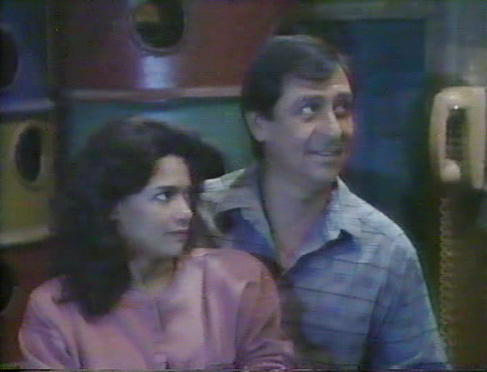
"What have we gotten ourselves into?"

Friday, June 8, 2012

Random Muppet #5: The Matador

On the Muppet Wiki, there is a "Random Muppet" button which sends you to the page of one of the thousands of Muppets in existence. I will press the button and discuss the importance of the Muppet that comes up, no matter how obscure. No skips. No redos. This is the Random Muppet Challenge.

Random Muppet #5: The Matador

The spirit of a bullfighter.

Performer:  Dave Golez

Muppet Universe of Origin:  The Muppet Show

Most Significant Appearance:  The Muppet Show, February 9, 1980, "Episode 418: Christopher Reeve"

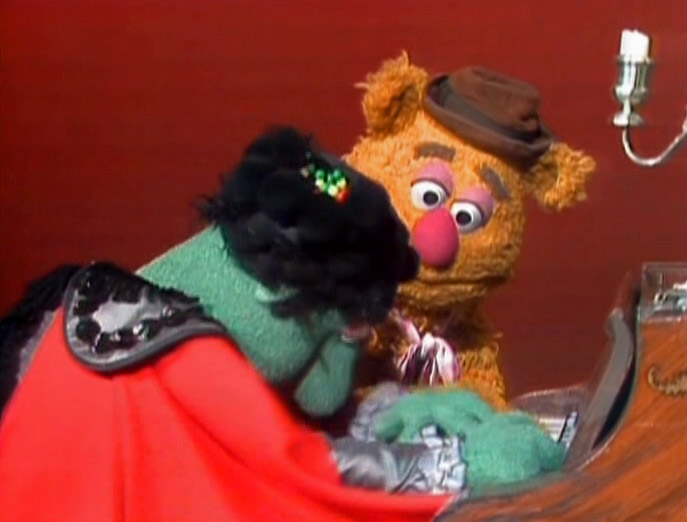
In the middle of the show, Fozzie finds himself alone on stage with a piano.  Although he is not the resident piano player, he does possess some musical skills, so he begins plinking the keys.  Just two simple notes, back and forth, without any reason.  Suddenly, the matador arrives and accompanies him on the piano, playing "The Toreador Song" from the opera Carmen.  (Clip begins at 7:15, click here to jump straight to it)


The matador fails to get very far in the song, for his presence has attracted a bull, which then proceeds to ram into the piano and piano players, cutting the song short.

When you mess with the piano, you get the horns.

Why Is He the Best Muppet?

The term "matador" is actually a translation failure.  In Spain, a bullfighter is actually called a torero, based on the Latin taurus for "bull."  Toreador is an older alternative of the word, but outside of Carmen, it is never used.  Torero refers to anyone who participates in a bullfight, but the leader of the bullfighters is the matador de toros, or "killer of bulls."  This has been shortened to "matador" in popular speech, even though on it's own, the word just means "killer."

The line between life and death is never more apparent than it is in the bullfighting ring.  The ritual of bullfighting traditionally ends in the death of the bull, but if the bullfighters are not careful, they may find themselves at death's door.  There are three stages of the bullfight, with the first two serving to weaken the bull.  The final stage is when the matador enters with his signature red cape.  Although the bull is now wounded, it is also angrier, fighting for it's life, making the final round the most dangerous.  Skilled matadors often display their talents by getting as close to the bull as possible during their fights.

In the sketch, the entrance of the matador is signified with a set change.  The blue background fades to read almost immediately, letting the audience know that death is imminent.  Unfortunately, this matador is either very cocky or just extremely unaware of his surroundings, because he turns his back to the danger in order to play his theme song.

Courage or stupidity?  It's all the same in the end.

Although the opera is set in Spain, Carmen was composed by Georges Bizet, and so the lyrics are in French.  The matador plays the most recognizable snippet from "The Toreador Song":

Toreador, en garde! Toreador, Toreador!
Et songe bien, oui, songe en combattant
Qu'un oeil noir te regarde,
Et que l'amour t'attend,
Toreador, L'amour t'attend!

Translated in English, we have:

Toreador, en guard! Toreador, Toreador!
And dream away, yes, dream in combat,
That a black eye is watching you,
And that love awaits you,
Toreador, love awaits you!

As you can see, this verse exhibits exactly what makes bullfighting so irresistible to the matador.  The "black eye" of death is always present, but all he can think about is the adoration that will await him when he succeeds.  He is blinded by optimism because the moment he gives into fear, all will be lost.

However, the music, the feeling of fame and fortune, has too strong of a grip on the matador and he fails to avoid the bull almost immediately.  One does not become a matador overnight.  He must have the appropriate skills to earn his rank.  So, when he fails, it is not just a simpleton's slapstick.  It is the fall of a great, if arrogant, man.  His fate is a punishment worse than death.  He is now a failure, and he can no longer receive the love he so craves.

The matador only appears this once, and it appears that Fozzie conjured both him and the bull into existence, simply by playing his theme.  We are not seeing an actual bullfight.  We are seeing the spectral afterimage of a matador, doomed to repeat his failure in the afterlife, clinging to his song, his one moment of glory.

In life, he sought honor.  In death, he seeks dignity.

Thursday, June 7, 2012

Random Muppet #4: Natalie the Cow

On the Muppet Wiki, there is a "Random Muppet" button which sends you to the page of one of the thousands of Muppets in existence. I will press the button and discuss the importance of the Muppet that comes up, no matter how obscure. No skips. No redos. This is the Random Muppet Challenge.

Random Muppet #4: Natalie the Cow

The cow that boldly went where no cow has gone before.

Performer: Jerry Nelson

Muppet Universe of Origin: Sesame Street

Most Significant Appearance: Sesame Street, December 12, 1974, "Episode 0694"

During the "Sesame Street News Flash" segments, reporter Kermit the Frog would visit a well-known fairy tale, fable, or nursery rhyme in order to get the inside scoop of what really occurred in these familiar stories. One day, he found himself in the middle of "Hey Diddle Diddle," just as the cow prepared for it's famous moon jumping. Kermit briefly interviewed Natalie the cow, as well as her manager, the fiddle-playing cat. Despite Kermit's lack of faith that the feat could be accomplished, Natalie leapt away and managed to impress the crowd with her extraterrestrial accomplishment.

Bovine history in the making.

After a nail-biting re-entry, Natalie returned to Earth, safe and sound, and she would forever go down in history as the cow who jumped over the moon.

Why Is She the Best Muppet?

Cows are simple creatures. They spend their entire lives eating grass and producing milk, providing a valuable service, but never amounting to greatness. The most famous cow is probably Mrs. O'Leary's cow whose claim to fame was knocking over the lantern that started the Great Chicago Fire of 1971. And that was just an accident. This cow didn't seek or desire fame. She was just a bystander, content with her life and suddenly forced into the history books by way of a freak accident.

Natalie also started as yet another nameless cow, bound to a life of obscurity and insignificance. But, like all great Muppets, Natalie was a dreamer. She was going to do something big. Something that would not only set her apart from other cows, but would set her apart from all other Earthlings.

 
She would no longer be just that random cow on the Farmer Grover jigsaw puzzle.

When Kermit asks her why she would even consider jumping over the moon, Natalie retorts with George Mallory's famous response to the question about his reason for climbing Mt. Everest:

"Because it's there."

Isn't that the whole reason man also traveled to the moon? Every night, our ancestors looked to the skies, looking at the great celestial beast that was always out of reach. To be able to say that you have kissed the surface of the moon is an incredible distinction. It's something that was once thought impossible, except to the dreamers. There is a Ray Bradbury anecdote making the rounds lately, in which he called up random people that he had met at a function many years earlier who ensured him that man would never walk on the moon. On the night of the moon landing, he called them to revel in their stupidity and narrow-mindedness. To the unintelligent, the smart appear crazy. Fortunately, Natalie didn't listen to her naysayers.

She went on to explain that she wanted to prove to all other cows that they can do anything they set their minds to. She doesn't just want glory. She wants to be a role model, inspiring everyone she represents. All the cows watching at home were changed that day. They finally saw one of their own making a difference, doing the impossible.

And then, without a moment's hesitation, as the cat's fiddle fiddled the "Wild Blue Yonder," she took off.

 
It's the Final Cowntdown!

No one knows exactly how she did it, or why she was so strong. Perhaps she herself didn't know what would happen. But she tried. And the results were miraculous.

That's one giant leap for a cow and one giant leap for cowkind.

While "the cow who jumped over the moon" is a familiar phrase in folklore, it wasn't until Sesame Street that we really understood what that fantastical phrase entailed. Behind that simple line lay a story of determination, resolve, and empowerment. Here was someone who didn't let any barriers stand in her way, whether they be dictated by her species, her gender, or the laws of physics. She aimed for a goal and reached it.

The cow jumped over the moon, and came back a hero.

Wednesday, June 6, 2012

Random Muppet #3: Granny Bird

On the Muppet Wiki, there is a "Random Muppet" button which sends you to the page of one of the thousands of Muppets in existence. I will press the button and discuss the importance of the Muppet that comes up, no matter how obscure. No skips. No redos. This is the Random Muppet Challenge.

Random Muppet #3: Granny Bird

Big Bird's grandmother and legal guardian.

Performer:  Caroll Spinney

Muppet Universe of Origin:  Sesame Street

Most Significant Appearance:  Sesame Street, Unknown episode that aired between 1992 and 2001

For a majority of the series, Big Bird's relatives were few and far between.  Except for his assorted international "cousins," the audience only heard about Big Bird's family through anecdotes.  And, outside of one early mention during the first year of the show, Big Bird's parents just didn't exist.  There was never any explanation given and one was left to assume that they were either dead or out of the picture.  It wasn't until 1992 (when the cast had a spare Big Bird puppet to remodel) that we finally met someone who helped fill in the blanks in Big Bird's past, Granny Bird.

Granny Bird had been appearing in storybooks since 1980 and had been mentioned in passing various times, but nothing is official until we see it on screen.  Granny Bird's first appearance was a sort of re-telling of "Little Red Riding Hood," in which Big Bird went to visit his grandmother on Grandma's Day.  Upon arrival to her house, he finds a big wolf sleeping in the bed.

My what no beak you have!

After much confusion, Big Bird learned that he had the wrong address, and he had actually barged in on the innocent Granny Wolf.  From this episode, it appears that Granny Bird's house was within walking distance, but as we'd see later, this would not be considered canon.

The more official version of Granny Bird appeared in a later episode, in which it was clear that she lives so far away from Sesame Street that she has to travel by plane to get there.  When her flight gets canceled, Big Bird feels sad, and then flies off into an uncontrollable rage.  When Granny Bird eventually does arrive, Big Bird is still very upset and his grandmother leaves again, thinking it would be for the best.  This causes Big Bird to spiral into a deeper, enraged depression.  Finally, Granny returns to talk with Big Bird, explaining that although she can't always be with him, she still loves him.

And they sing the blues away.

Granny would make occasional visits throughout the series, and her advice would stick with Big Bird, even when she wasn't around.  But at least he felt safer, knowing she was out there.

"Remember to use the force."

Why Is She the Best Muppet?

As a representative of children, Big Bird must deal with some very difficult issues that he barely understands.  He usually remains happy-go-lucky, but he can't always stay positive.  Like many children, Big Bird suffers from parental abandonment issues.  Both of his parents have removed themselves from his life, and the closest relative he knows lives too far away to take care of him.

Granny Bird doesn't show any malice in her actions, but she may not realize the impact her absence has on this young child's life.  In one very important episode that was patterned after the Hurricane Katrina disaster, Big Bird finds his nest destroyed by a storm.  Without a place to live, he calls his grandmother to tell her the news.  She responds with some sagely advice, "Get twigs," meaning it is time to rebuild.  And while that is an important message, perhaps rescuing your newly homeless 6-year-old grandchild may also be on the agenda. 

Oh, so, you're not going to help a child in need?  That's okay, I guess.  Talk to you again soon.

Granny Bird has been removed from Big Bird's life since Day One.  In the prequel series, Sesame Beginnings, Granny Bird delivers a newborn Big Bird to his aunt Nani, who serves has his primary guardian throughout the series.  Taking care of an infant is a big responsibility, and it appears that Granny Bird is just not up to the task.

Nevertheless, Big Bird loves his grandmother unconditionally, and this is why he is driven to such anger when he is deprived of her presence time and time again.  She frustrates him, but also inspires him.  He stockpiles every piece of advice she has ever given him, because she is the one he trusts wholeheartedly.  She may not be aware of the damage she is doing to his psyche and self-esteem, but she tries her best to be a good grandmother when she is present.

This is classic case of a neglectful parent.  But I don't blame Granny for this scenario.  The entire Bird family is filled with hidden issues that are never discussed.  Perhaps she is actually doing her best to see Big Bird whenever she can and it is actually his parents that are causing the distance.  As we stated before, Big Bird's parentage was only mentioned just once.  It was in reference to a gift he received from his mother.  His father is never mentioned.

Because this is a children's show, we must tread carefully.  Sesame Street has dealt with heavy issues in the past, but the mysteries surrounding Big Bird's family may be the heaviest of them all.  His father is completely absent, and perhaps was never known.  His mother is alive, but is never seen and has never visited.  Is she in some sort of correctional facility?  Does Granny have to care for her well-being, forcing her to abandon Big Bird for extended periods at a time?

Not every child has a happy home life.  Many are moved into foster care and halfway houses due to the issues with their parents and family.  They are too young to grasp why life is so difficult for them and they must find makeshift father figures and mother figures in the people the see the most consistently.  Their teachers, their case workers, their neighbors.  Sesame Street may be the best possible setting for Big Bird to grow up in and Granny Bird has placed him there to shelter him from the dangerous truth.

She still loves him, even if she can't always be there.

I'll love you forever.  I'll like you for always.  As long as I'm living, my Big Bird you'll be.

Tuesday, June 5, 2012

Random Muppet #2: The Birthday Cake

On the Muppet Wiki, there is a "Random Muppet" button which sends you to the page of one of the thousands of Muppets in existence.   I will press the button and discuss the importance of the Muppet that comes up, no matter how obscure.  No skips.  No redos.  This is the Random Muppet Challenge.

Random Muppet #2: The Birthday Cake

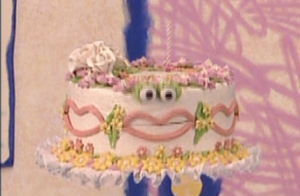
A sentient, sexually-ambiguous, floating cake with an unintentional death wish.

Performer:  Fran Brill/Joey Mazzarino

Muppet Universe of Origin:  Sesame Street

Most Significant Appearance:  Sesame Street, February 2, 2001, "Episode 3940"

In the recurring "Elmo's World" segments that began taking up a third of each Sesame Street episode in recent years, Elmo would choose a topic and ask questions about it without relenting for about 20 minutes.  He would interview various authorities on the subject, or present little clips that related to the subject in some way.  It was the television equivalent of a toddler tugging at your pant leg and asking "Why?" after every single thing you said.

One day, Elmo became really excited about birthdays, so he set out to explain the concept to all the viewers at home.  And while everyone in the world has the experience of being born, Elmo managed to book some abstract guests for his show, namely a birthday cake.  The cake only appears for two lines and then Elmo's short attention span causes him to get distracted by something else.


If you managed to make it to the birthday cake's appearance, you'll notice that it only had one noteworthy piece of wisdom when Elmo asks what its life is like:

Birthday Cake: "It's a piece of cake"

And that's it. The birthday cake floats on to spread advice and icing throughout the land.

Why Is He/She the Best Muppet?

Imagine the life of a birthday cake. Prepared with tender care, the birthday cake is treated very delicately, dressed up and decorated, quite possibly the prettiest of all foods. You are assigned a dangerous but revered task of carrying one or more burning torches, like an Olympian. When you are brought out to meet the public for the first time, the crowd erupts in a song of delight. Everyone focuses on you as you are presented to the guest of honor. They blow out your torches, you grant them a wish, and the ceremony is complete.

All sentient food in the land of the Muppets is aware of their imminent demise. They choose to accept or ignore their short lifespan and instead sing and be merry. But this birthday cake is actually treated with class and respect. It doesn't sing because it genuinely believes it will have a long rich life. The way everybody treats it, how could it not think that it is the center of the universe?

As soon as the knife is injected to make the first slice, realization hits and death is mere seconds away. But the cake has no reason to expect any harm. All other food is eaten along with other food. On the dinner plate, food helplessly watches as their brethren are eaten. In the fridge, food trembles in fear, awaiting the day they are either selected for consumption or met with expiration. The birthday cake lives it's entire life in solitude. It doesn't interact with other food, as it is often hidden from the birthday guest. The cake, for all intents and purposes, is untouchable.

The birthday cake appears again in a segment explaining the word "scrumptious." This time, it has a manlier voice, so it is unclear whether or not this is the same cake from Elmo's World. Either way, the cake has the perspective that all cakes have, unaware of the truth.

"Attractive celebrity" Jessica Alba presents various food items she finds scrumptious. Her final choice is the birthday cake, who in turn agrees that Alba is also "scrumptious."

They are both scrumptious, in very different ways.

This birthday cake clearly doesn't realize that scrumptious has two meanings. He/she believes Alba is complimenting his/her good looks and attractiveness. Alba laughs and plays along, but she knows that cake is not meant for this world very much longer.

Is it better or worse to be ignorant of ones mortality? The birthday cake lives its entire life in bliss. Is that necessarily a bad thing? Is there even an answer?

Life is not a piece of cake. Unless it is.

Monday, June 4, 2012

Random Muppet #1: The Last Male Glig

On the Muppet Wiki, a great source for everything Henson, there exists an intriguing button at the top of each page labeled "Random Muppet."  Clicking it will randomly send you to one of the thousands of Muppet character pages on the site.  I have always been curious to push it, but fear of the unknown has held me back.  Now that I have covered most of the signature Muppet characters, I feel it is safe to press the button.

One week a month will be "Random Muppet Week."  My self-imposed challenge is to cover whichever character comes up, no matter how obscure or pointless.  No, I am not out of ideas for posts.  This is a feature I've wanted to do since Day 1.  I will not cover Muppets that I feel I have adequately covered in the past, nor will I cover Muppets that I have specifically planned posts for.  This still leaves plenty to choose from.

So, here is my first spin at the Random Muppet roulette.

Random Muppet #1: The Last Male Glig

He's the bug-eyed little guy pictured in the center.

Performer: Frank Oz

Muppet Universe of Origin: The Land of Gorch

Most Significant Appearance: Saturday Night Live, November 8, 1975, "Candice Bergen"

It was the fourth episode of SNL, so the Muppets had yet to wear out their welcome and the sketches hadn't yet become self-depricating and self-referential.  The actual Land of Gorch was still in it's introductory stages, and this sketch focused on a bit of world building.  The conflict of the day concerned the possible extinction of the Glig species.

King Ploobis has been treating his mistress Vazh to a meal of Gligs, his favorite food.  Vazh points out that there are only two Gligs left in the world, so he had better choose his actions wisely.  Not one to see the big picture, Vazh suggests they eat them or turn them into a hat.  But Ploobis understands that something must be done before he permanently destroys this wonderful species.  Although, everyone is coming to this realization awfully late.

Ploobis's wife Peuta returns, showing off the new Gligskin shoes she just purchased.

Don't worry, those aren't the last Gligs.

It finally all hits Ploobis that they have been recklessly killing Gligs for food and clothing without considering the long term effects.  He calls upon Scred for assistance and he suggests placing them in a museum.  Not happy with that solution, he decides it is time to consort with the Mighty Favog.

The Mighty Favog, in exchange for his wisdom, requires a sacrifices of two chickens and one Glig.  And here is where things get weird.  First, in this strange Land of Gorch, we have both Gligs and chickens.  Why have one actual animal thrown in with the fake animal?  It is never addressed.  But we must assume that not only do Gligs taste better than chickens, they can also make some fashionable accessories and clothing.  So, you would think that they would be more reptilian than bird-like.  But then, Scred catches a Glig and we see very clearly that it's a bird.

Okay, so you're thinking that's the joke.  They try to save the species and end up sacrificing it.  Haha, good laugh.  But the sketch continues.  After explaining the situation to Favog, Favog releases the Glig so that it can procreate with a female.  That's good for the Glig, but a weak, non-funny way to end the sketch.

When the Glig resurfaces, we have a neat moment where Frank Oz is performing two puppets live (since he is also Favog).  The Glig shouts for his mate Bernice, and the two runoff to make lots of babies, thus saving the endangered species.

Why Is He the Best Muppet?

The last male Glig was placed in an existential situation that has enlightened him unlike any Muppet before him.  He was just minding his own business, noticing that things seemed awful quiet and lonely lately.  Then he gets captured and nearly killed and during this process he overhears that he and his partner are the last of their kind.  If that doesn't put perspective on your life, I don't know what does.

With a renewed sense of vigor, he rushes to the woman he loves, a woman he has probably been ignoring lately and taking for granted, and realizing that they must begin a new era, lest their species perish, forever immortalized as handbags and scarfs.  This is a man who has seen the future and has become the controller of his own destiny.

This story would play out again in the later special "The Song of the Cloud Forest," but in that case, Milton was meek and required the assistance of his animal friends and human intervention.  This Glig was truly alone in a world that wants nothing more than to see him dead.

He is a survivor.  He is a hero.  He is a Glig.


His descendants would later learn to co-exist peacefully with their predators.

Friday, June 1, 2012

The Muppets Take Manhattan, Part 5: Meta-Musical Parody?

In the week leading up to the premiere of Manhattan Melodies, the gang continues their search for Kermit, Kermit continues to find success with the advertising frogs, and publicity for the show has skyrocketed, resulting in a sold-out opening night.  Because, if there is one thing the New York elite loves, it's musicals that have a simple title, an unknown cast, and a storyline of "young people living in New York."

Did Jonathan Larson write this?

Finally, opening night arrives and Kermit still hasn't been found.  The group convenes at Pete's wallowing in pity as they decide the must perform the show without Kermit.  Just then, the frog firm decides to stop in the restaurant for lunch after a hard day of being boring.

Although, Kermit did quadruple their profits in a week.  That's impressive.

As he sits in the booth next to the Muppets, Kermit begins to get a familiar vibe from the restaurant and starts playing a little tune using his spoon and some water glasses.  The Muppets recognize the tune as "Together Again," and soon they reconnect with Kermit, whisking him away to the show, despite his continued memory problems.

Kermit/Phil remains surprisingly calm for someone who has been kidnapped and forced to be the lead in a musical.

Everyone tries their hardest to remind Kermit of who he was and eventually Piggy has to resort to a touching monologue about how the two of them are in love.  Not surprisingly, Kermit laughs in her face.  And Piggy has to resort to Plan Karate Chop.


With his memory restored, Kermit prepares to start the show.  All the other puppets that have accumulated during the movie gather backstage to watch and Kermit decides that all the extra bears and frogs and dogs and whatever should be IN the show!  That's what the show had been missing all along!  Uh, maybe they shouldn't be taking advice from the guy just recovering from a serious head injury because that plan is absurd!  But, it's the Muppets so we have to embrace the nonsensical.

And so it begins.

What follows is sheer ridiculousness.  Like the "Magic Store" finale for The Muppet Movie we get a sped up version of the musical.  The musical starts with the opening number "Right Where I Belong," then segues immediately into the finale with "Somebody's Getting Married."  I assume it's the finale because, even though it seems to be setting up the story, it moves right into the wedding which is at the end.  It has nothing to do with Manhattan.  And somehow, all the characters who were added at the last minute know exactly what to do in the musical.  In fact, it doesn't look like the musical would have logically worked without everyone there to fill in the vacant roles.  Song's still catchy though.


As I said, this immediately precedes the wedding of Kermit and Piggy which is when things become truly bizarre, but also perfect.  As soon as we enter the chapel, the Broadway theater disappears.  The chapel has four complete walls, so the audience could no longer possibly exist at this point (and we never see them again for the rest of the movie).  This is a real chapel with a real wedding, even though the characters are still singing as if it's part of the musical.  And despite the alternate history this film has set up, the rest of the Muppets are in attendance, suggesting that this is the only "real" part of the movie that connects to The Muppet Show.

Everyone's here, even Uncle Traveling Matt (in the front right row)!

Like the end of The Muppet Movie, everyone has reunited for this special moment.  Kermit and Miss Piggy are actually getting married!  As Piggy sings "He'll Make Me Happy," the two walk down the aisle, passing all of their friends.

Although should the cast of Sesame Street be sitting on the groom's side?

Kermit still thinks this is all part of the show, until they reach the altar and the minister is an actual minister, not just Gonzo.

And he's not an actor.  Dr. Cyril Jenkins was an authentic minister hired for the movie.  This marriage is legitimate.

Being put on the spot, Kermit realizes that in order for the movie/musical to end properly, he is going to have to actually marry Piggy.  So, after a moment's hesitation, he says, "I do."

And all is right in the world.

And...that's it!  That's The Muppets Take Manhattan!

Why?  What did you expect to happen?

Of the original three Muppet movies, I find this one to be the weakest.  All three are very different films, and the stories aren't supposed to connect, but The Muppet Movie and The Great Muppet Caper are at least focused in what they want to accomplish.  The Muppet Movie is a road movie, which allows for disconnected, episodic scenes.  But it has a continuous goal and Kermit goes through a definite arc from beginning to end.  The Great Muppet Caper is looser with the comedy, but it sticks to it's basic plot and everything else is just over the top parody.  And even though the Muppets' appearances are more random, they don't slow down the film.  And once again, we have a definite character arc, this time for Piggy.

The Muppets Take Manhattan seems to have taken a few steps back.  Both Kermit and Piggy have had their personalities reset.  Kermit once again is chasing the impossible dream and Piggy is once again a controlling, egotistical diva.  In The Muppet Movie, we watched Kermit's struggle to get to Hollywood, so his meeting with Lord Lew feels earned.  Here, his script is produced through blind luck, through no effort of his own.

Yes, Kermit tried various ways to get his script noticed, but you know what he didn't do?  REWRITE THE SCRIPT!  During the entire film, he says that the script is "missing something," yet he doesn't make any changes until the very, VERY last second.  We barely get any sense of what the script is about.  Maybe that was intentional and part of the humor, but it seems weird for us to blindly follow in Kermit's dream when we don't really know what his dream is.  He wants to be big on Broadway with a script that has no substance?

This image is not featured in the film, but it hints at a movie that had more depth to it.

The film was written in order to be a parody of "putting-on-a-show" musicals of previous eras, which were notorious for having simplistic plots and pointless musical numbers.  These musicals are still considered classics because the songs were memorable and great, but they weren't known for their amazing plotlines.  This movie definitely gives off the vibe of such a musical, but I do not get a sense of parody or satire at all.  If it's there, then it's subtle.

Like those musicals, The Muppets Take Manhattan has plenty of great moments that are perfect additions to the world of the Muppets, so I have picked out the top 5 parts you should watch if you don't want to see the whole movie.


The opening song is just fun and catchy and a great way to reintroduce the Muppets.


Jim Henson was absent for most of this movie's behind-the-scenes production, save for performing Kermit, Rowlf and Dr. Teeth.  He left directorial duties in the hands of Frank Oz, who would go on to direct some of my favorite movies.  But the one scene that had Henson's total influence was the cooking scene with the rats.  It reminds you how Henson was always looking for new ways to use puppetry and this funny scene works because of him.


The rest of the movie's silliness overshadows this early song, which, when taken on its own, is very meaningful and sad.  If we hadn't had seen all the crazy adventures the Muppets got up to after leaving New York, their absence would have been strongly felt and we could sympathize with Kermit during the film.


Even if you weren't a fan of the show, the introduction of the Muppet Babies is wonderful.


When the wedding starts, the entire movie up until this point has pretty much been abandoned.  This tonal shift is probably the best part about the movie.  The entire film walked a weird line in how we were supposed to interpret the Muppets.  The looked and behaved just like the ones we were familiar with but they had none of the history that we knew them for, making them completely unknown in the eyes of the rest of the movie's universe.  So, what history did they have?  The Great Muppet Caper set up the new backgrounds and continually broke the fourth wall to suggest that the Muppets still did everything we remember them for, just not in this story.  But this movie has no fourth wall breaks (unless I missed one).  So, when the wedding occurs, it's like we can breathe a huge sigh of relief.  Finally, all our old friends are back.  And it's special.

This is the movie I came to see.

The Muppets Take Manhattan is an assortment of ideas that attempt to resemble a story, but ultimately, it feels lacking.  Had the movie been more about Kermit's creative process in trying to write a Broadway musical, then the elements of parody would have been stronger and more evident.  As it stands, the movie is just an alternate-universe event where "a bunch of stuff happens" with familiar characters.  It never quite reaches the classic status that the first two movies did, but it provides enough entertainment for fans of the Muppets and Broadway musicals alike.  For me, the lack of Henson's presence is evident throughout and the failure to find a focus results in a muddled mess.

But, as Pete would say, "Movies is movies."

"There was a time when I enjoyed this movie."  "When was that?"  "When it was over!  Doh-ho-ho-ho!"