Showing posts with label steve whitmire. Show all posts

Saturday, September 8, 2012

Two Stupid Pigs

Low-brow humor gets a bad reputation.  Appealing to the lowest-common denominator classifies one as being unintelligent, lazy, or immoral.  Yet, this is humor distilled to it's most basic form.  Mere slapstick and lewd sounds spark guttural, involuntary laughter because they are unexpected to us.  "The Three Stooges" shorts are classics, not because they provided great insight into the human process, but because they speak the universal language of physical comedy.

Two characters that people may point to as a sign that Muppets Tonight paled in comparison to The Muppet Show are Andy and Randy Pig.

He's Andy and he's Randy.  I think.

The Muppet Show had unhinged characters and dim-witted characters and one-dimenisonal characters, but they did have pure idiots like Andy and Randy, especially not as their main characters.  These pigs were so cartoonishly stupid that they had no semblance of realism.  They took every word literally, enjoyed bashing their heads together, forgot who they were or how their body functioned, and refused to complete the most minor of tasks with their catchphrase, "This job's too hard!"

The pigs originally appeared as a duo known as "Kirby and Jeff" in one of Nickelodeon's "Muppet Time segments, where they are two young boys who attempt to prove that they can get dressed all by themselves.


Here, their imbecilic actions are understandable.  Little kids still have a lot of growing to do, but they often like to show off what they have learned, even  if they still lack the abilities to do so.  This song is cute and accurate for their age.  But this set the tone for all future appearances.

After Muppet Classic Theater redubbed them "Andy and Randy," their relation to Miss Piggy was established.  In the first episode of Muppets Tonight, Miss Piggy agrees to appear as the guest star if Clifford hires her two nephews.  While Piggy would appear less frequently from then on, Andy and Randy were there to stay.

Now played by Steve Whitmire and Dave Golez, Andy and Randy would cause all sorts of trouble for the crew.  Their biggest episode was "Episode 104: John Goodman" in which John Goodman saves their lives from being electrocuted, so they decide to repay him by becoming his personal slaves.  And of course they only do more harm than help.

It gets worse from here.

This is probably the twin pigs' worst episode because they are so prominent.  With pure, unbridled idiocy, small doses are the best.  This is why the Ralph-Wiggums of Television Land are usually regulated to bit parts of larger ensembles.  Fortunately, the writer's realized this, and soon, Andy and Randy would only appear once per episode.  And these moments would be fantastic.

My favorite recurring segment was "The Eagle's Nest," Sam the Eagle's political panel in which he would attempt to discuss important affairs with whomever he was able to scrounge up.  Andy and Randy Pig were the only ones dumb enough to participate, and thus appeared in each episode.  Having Sam grow increasingly more agitated while he attempted to maintain control was a delight, especially when Andy and Randy would twist his questions into some clever wordplay.  The following clip may be the best of the bunch, as only the pigs have shown up this time.


The repetition of "Messrs" at the beginning is innocently adorable (and would carry over into a future episode) but I was particularly fond of the pigs shouting "Yoyoyoyoyoyoyo!" as they tied Sam to his chair, because this was calling back to an earlier episode in which Clifford greeted them with the phrase.  It shows that they are learning.

However, there was one second season sketch that truly put Andy and Randy into their element.  In "Episode 203: Heather Locklear," the pigs somehow got the opportunity to write their own sketch.  This resulted in the perfectly-titled "The Hardy Pig Boys in 'The Mystery of the Zombie Queen of the Amazon Outer Space Jungle Bee-Woman Case' (based on a novel by Jane Austen)."

 Now this should have been the whole episode!

Andy and Randy, in true Andy and Randy fashion, fail to make it past the first line of their script without getting horribly confused about what they had written.  They don't understand their own jokes, they fail to solve the mysteries of who their characters are, and five pages consist of doodles.  But it ends with Kermit as Godzilla tearing through the scenery.  Ed Wood would be proud.

It's clear that when performing the pigs, Golez and Whitmire just set out to have as much fun as possible.  Adopting these doofy voices and failing the puppets about whenever they got the chance, the two puppeteers obviously did not care how silly they were being.  Andy and Randy could push the limits of low-brow humor and that's what makes them so ceaselessly entertaining.  They could mine a joke out of any situation and, unlike most of the elements of Muppets Tonight, it was evident that they weren't trying to hard.

Andy and Randy were comedy popcorn: not intellectually filling, but enjoyable and reliable nonetheless.

And they did it by themselves!

Tuesday, August 21, 2012

The Vacation's Over

After losing both Jim Henson and Richard Hunt, the Muppets dropped off the radar, and stayed off until 1992 when The Muppet Christmas Carol signaled their return.  And while the movie was fun, the Muppets took somewhat of a backseat to the story, so the next few years were spent building up excitement for a true comeback of our favorite characters.  1996 was going to be the big year, featuring not only another feature film, but also the premiere of an updated version of The Muppet Show.

So what did they do during those three years in between?  They had a vacation.

Let's all go to the beach and never come back!

The first major Muppet project after Christmas Carol was also the first Muppet music album comprised of purely original material (as much as covers of songs can be considered original).  The newly formed Jim Henson Records released three new albums.  One was a collection of classic songs featured on previous television and movie soundtracks, one was a previously unreleased album featuring Henson as Rowlf covering famous Muppet tunes, and the third one was the actually new "Muppet Beach Party."

And it's.....not so great.

I kind of wish I had chosen to review the Rowlf album instead.

Last summer, a couple of the contributors of ToughPigs.com reviewed the album and their assessments ranged from "tolerable" to "terrible."  Both reviews are worth checking out, especially since I was unable to locate all of the songs for download (and unwilling to buy a $74 copy from Amazon).

The "story" of the album is that the then-current Muppet gang (Kermit, Piggy, Gonzo, Fozzie, Animal, Rizzo, and Clifford) go on vacation and sing as many beach-related songs as possible.  A common complaint is that usually one Muppet will sing while another would interject with his or her commentary after every line to make it "funny" or "annoying."  Songs without much Muppet interference, such as the Rockapella version of "Papa Oom Mow Mow" fare the best.  Although one wonders why include Kermit and Clifford at all, since this is the only song not sung by Muppets.

The most egregious example of this "unnecessary Muppet dialogue" is in the final song "Wipeout" by the Surfaris which is a mostly instrumental piece.  So of course, to make it "Muppet-y," Animal just shouts "WIPEOUT!" over the music repeatedly.


Yes, that was the official music video for the song, which was the album's second single.  The first single was far less painful, though.  Steve Whitmire as Kermit performed "Kokomo" by the Beach Boys.  Regardless of your musical tastes, this song choice is probably one of the best on the album and the accompanying music video isn't half bad (especially since the album version features Piggy cooing over Kermit throughout the whole song, just to remind us she's there).


The song describes a fictional island paradise known as "Kokomo" which is supposed to be the ultimate vacation spot.  A tropical getaway where two can relax, play, and fall in love.  It is the ideal dream, what most of us wish for when we picture a perfect place on Earth.  It is fitting that Kermit would dream to visit there and that Piggy would inevitably cause stress and pain on his vacation.  Because eventually, you have to return to the real world.

Alright guys, time to stop pretending we are actually at a beach.

There's only one problem with the Muppets' "Kokomo," though.  They had already done this song four years earlier.  Except it was an original song called "Sweet Vacation."  And Jim Henson was singing it.  In fact, if you turned off the sound to both of these videos, you would have a hard time telling them apart.


You'll notice that "Sweet Vacation" features the cast of MuppetTelevison because this was actually the closing number to the "Monster Telethon" episode where the gang decides to try their hand at hosting the show and running the studio, giving Kermit a much needed vacation.  And by the end, they decide to just join him on his vacation, because it beats having to clean up the messes they made while he was gone.

Also you'll notice that this song is great.

Because, unlike the "Kokomo" video, the vacation in question isn't some impossible ideal dream.  It can apply to any relaxing moment with friends.  Just the relief that comes from taking a break is all one needs in having a good time.  This is a vacation that can occur anywhere at any time.  Plus, Piggy doesn't show up at the end to cause misery and suffering.

"Muppet Beach Party" reeks of a cash-in novelty album hoping to recapture the fun of the Muppets, but it instead falls short and reminds us of the greatness we are missing.  The songs seem hollow and without passion.  The zaniness feels forced.  The whole ordeal just feels wrong.  The fact that an entire album can be eclipsed by one song says a lot.  In a few minutes, "Sweet Vacation" gives us every thing we need and want out of a summer of Muppet recreation.

It may be short and sweet, but this vacation is endless.

Tuesday, February 14, 2012

Nice Fraggles Finish Last

Love is not supposed to be stressful.  By its very definition, it is supposed to illicit warm feelings and happy thoughts.  But love leaves us vulnerable and one misstep can leave a person feeling crushed.

A common victim of love is the stereotypical "nice guy."  He's the one who excels at being your best friend.  He always knows what to say when you're down.  He always knows how to help when you're overburdened.  He always knows exactly what you need, when you need it.  He has one goal, and it is very seldom met.  He wants you to love him as much as he loves you.  This does not just apply to romantic love.  It can be platonic, brotherly, or compassionate in his intentions, and he hopes that by providing what you need, you will love him for it.

Wembley Fraggle is the epitome of the nice guy.

Each Fraggle gets assigned a few character traits, and one of Wembley's biggest attributes is that he is helpful.  A Fraggle's life is not complicated.  They have no responsibilities, just hobbies and pastimes.  So when they ask for help, their task is usually a) simple and b) pointless.  Wembley doesn't mind helping his friends.  In his eyes, that is what a friend is supposed to do.  If they seek out his help, they will love him because he cares enough to fulfill their request.

But Fraggles are also simple-minded, which can result in self-centric behavior.  Wembley's friends are so used to Wembley saying "yes" to every request that they automatically assume he can do whatever they want him to do.  So when all four of them ask for his help simultaneously, Wembley implodes and becomes stuck under the burden he has committed himself to.

Literally.

It is in this moment of weakness that Wembley meets a new Fraggle named Lou.  She's a cute girl whose most attractive quality is that she is willing to help him in his time of need.  Having never met someone as compassionate as he was, Wembley begins to think there is something special about this girl.

She's an angel!

He tells his friends about this new girl and Mokey, ever the romantic, takes this moment to revel in the fact that Wembley is passionately in love.  Wembley isn't so sure about that, but Mokey won't hear of it.  She convinces him that, yes, he is in love, even though he barely knows her.  He begins to worry if this great, strong girl would ever fall for a weak-willed wimp like himself, who can't even muster up the courage to say "no" to his friends.


In order to live through Wembley's romantic situation, Mokey takes him to the wise Trash Heap for advice.  The Trash Heap notices that Wembley is afraid Lou will not love him back and so she whips up Love Potion #9.  This potion's fumes are so toxic that one little whiff will have a Fraggle fall madly in love with Wembley for 20 minutes.

Fortunately, Wembley's intentions are pure.  Don't want that falling into the wrong hands.

On his way back to Fraggle Rock, however, Wembley mistakenly drops the concoction into the Fraggle's water supply.  Everything goes exactly as expected.

It's a full-on Fraggle orgy!

For a brief moment, Wembley gets his exact wish (although it is a little extreme).  Everybody actually loves him, instead of just abusing his gracious generosity.  But the love-fueled zombies eventually subside and Wembley realizes that he must face Lou without any magic potion to help him.

He gets the courage to tell her that he loves her, but it's not a passionate, amorous love as Mokey had hoped.  It is a love based on respect.  Lou showed him kindness where know other Fraggle had.  She cared about his feelings and his problems.  That was all he wanted out of his friends and therefore, it was all he needed to love her.

"We Love You, Wembley" ends like a typical love story, where the nice guy does get the girl in the end.  She knows that he is just a wimp, but she can learn to love him.   Because, despite their flaws, wimps are dependable when it truly counts.

And we never saw her again.

Monday, December 12, 2011

The Muppet Christmas Carol, Part 1: Bah, Humbug!

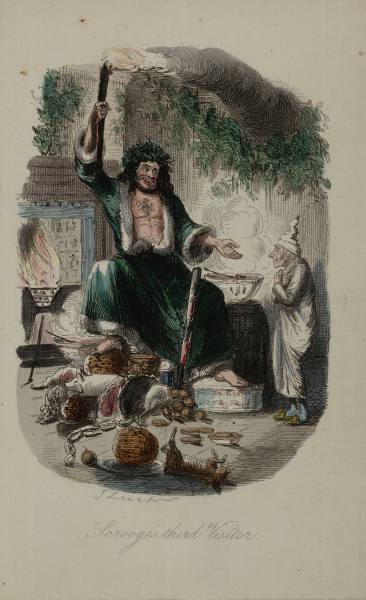
Charles Dickens' A Christmas Carol is rightfully considered a classic due to the impact it had on our modern day perception of Christmas.  Published in 1843, this novella was the first story to focus on the festive spirit and secular traditions that surrounded the holiday season, rather than the religious and pagan history from which it was born.  The concepts of family togetherness, celebration, and generosity were brought to the forefront in the story, forever linking them in the public's minds with Christmas.

Drink and be merry!

Because of its influence, the story has been retold countless times through various media, with over 50 interpretations presented on television or in film.  Each version adheres to the same basic plot structure following one person's journey through the past, present, and future to rediscover the true meaning of Christmas.  With so many adaptations to choose from, some are bound to be over better quality than others.

Many people cite The Muppet Christmas Carol as being not only their favorite Muppet movie, but as being their favorite interpretation of A Christmas Carol as well.  I am not among those people.  As its own movie, I think it is fine.  But as a Muppet movie, I do not consider it the best and as A Christmas Carol, I find it to be severely lacking in quality.  I believe most supporters of this movie are clouded in their own sense of nostalgia, only remembering having enjoyed this movie as a young child.

But perhaps I am being unfair.  Everyone I encounter loves this film with all of their heart.  Perhaps I am just missing something.  I shall watch this film again, to see if it truly does hold up as more than just a kids' movie.  So, here we go.  This week, it's The Muppet Christmas Carol.


There are two rats on the poster.  We're in for a treat!

First, a little history.  This was the first Muppet movie to be made following the deaths of two very influential Muppet performers, Richard Hunt and Jim Henson.  As such, their more memorable characters were pushed to the background or removed entirely from the project (Scooter, in particular is completely absent).  This was also the first film to be produced under the Walt Disney Studios name, which results in a more streamlined production differing in tone from the original three films.  The movie was originally intended to be made for TV until Disney expanded the budget.  However, these changes will not influence my review in anyway.  Although Henson and Hunt are missed, their spirit lives on in the remaining puppeteers and Jim's son Brian, who directs the film.  It is still very much a Muppet group effort, even if it must suffer the burden of being made during this unexpected transitional period.

The film opens on a busy 19th-century London street in the wintertime as Muppets and humans coexist without tripping over one another.  Puppet-recycling is in full effect as many minor characters from past productions appear in Victorian garb.  As merchants hock their wares on the street, we settle on a booth manned by the Great Gonzo and Rizzo the Rat.

Charles Dickens and friend

In the original script, Muppets were supposed to play all of the major characters, including the three Ghosts of Christmas.  Piggy would be Past, Scooter would be Present, and Gonzo as Future.  However, as it underwent revision, it was decided that the Ghosts should be more foreboding in order for Scrooge and the audience to take them seriously.  Also, a voice-over narration had been considered in order to keep Dickens' masterful language intact.  But when Gonzo got booted from the ghost role, it was decided to place him as the role of the narrator.  Rizzo had recently joined the ranks as a main Muppet character and his performer Steve Whitmire had a great repertoire with Gonzo's Dave Golez.  With Gonzo as Dickens and Rizzo on deck to provide commentary and comic relief, the comedic duo were allowed to lead the audience through the movie.

This choice is one of the movie's great assets.  Most versions try to keep the narration either through another character, as a voice-over, or (in the most clumsily fashion I've ever seen) incorporated into the dialogue.  But Gonzo presents a liveliness to the narrator that is not present in any other version and, more importantly, he cares about the story.  While Rizzo often gets side-tracked with his jokes, Gonzo is always there to keep everyone focused on the story at hand.  As I mentioned in an earlier post, the erratic Gonzo is capable of deep pathos, making him the perfect choice to play Dickens.

Dickens begins his tale, introducing Ebenezer Scrooge by way of the film's first musical number.  This catchy song is cute, but I feel it fails to fully characterize Scrooge.  It falls into the common trap of telling rather than showing.


Our Scrooge (Michael Caine) calmly strolls through the singing puppets, ignoring them all the way.  Despite their claims of his many faults, we are not treated to any of them during the song.  For comparison, I implore you to check out the 1970 musical Scrooge starring Albert Finney.  During his introduction song "Father Christmas," we witness him going about town calling upon his many debtors, showing little compassion to their plights.  He is outright mean to everybody he encounters and shows no remorse at all.  Caine, on the other hand, while a great actor, does not display any signs of cruelty yet, despite what the lyrics imply.

In fact, he often seems as if he would rather be anywhere else.

Perhaps this is meant to show how disinterested he is in the lower class, but it just comes off as boredom.  This continues as he enters his office and casually tosses out a random Muppet asking for an extension in his mortgage payment.  Drawing on another comparison, Alastair Sim's famous portrayal in 1951's A Christmas Carol took his disinterest in the common man to a whole new level.  It seemed as if life had beaten him down so much that there was nothing left for him but resentment.  He showed no compassion to anyone because he was physically incapable of finding those emotions.  The human race became foreign to him and their joy at Christmas irritated him because he was unfamiliar with it.

Caine, however, plays Scrooge as a jerk who just enjoys being a jerk.  When he sends Bob Cratchit to prepare the many eviction notices due on Christmas, he seems to exhibit a villainous glee at the prospect of people losing their homes.  Scrooge may be cold-hearted and unsympathetic, but evil?  That's pushing the character a little too far.  Scrooge's main fault is that he is self-absorbed, not malicious.

Money for the poor?  I'd rather watch them starve to death while I stroke my cat.

Kermit as Bob Cratchit, like Gonzo as Dickens, is another inspired Muppet casting choice.  Kermit's humility is almost identical to Cratchit's meek yet optimistic persona.  One welcome addition to the original dialogue is when Cratchit tries to ask for Christmas day off from work.  Usually, Scrooge reluctantly gives in to the custom, decrying it, but acknowledging it nonetheless.  Here, he puts up some resistance, prompting Cratchit to appeal to his thriftiness by logically explaining he would lose more money by staying open on a day when all other businesses are closed.  That's very clever and bold for the usually subservient Cratchit.

But why he has to be surrounded by a gaggle of unnecessary rat co-workers is beyond me.

I shall conclude today's post with Kermit/Cratchit's pleasant song "One More Sleep 'Til Christmas."  Like with "Scrooge," I find that the visuals and the lyrics do not exactly match up, as the rat bookkeepers exhibit many playful slapstick as they pack up shop while Kermit sings a low-key tune.  This is one of those moments that distracts the viewer as the story is placed on hold to allow for puppet antics.


The end of the song with the shooting star presents a nice contrast as the camera pans over to a homeless Bean Bunny, struggling to keep warm in the trash.  What is a beautiful Christmas Eve night for one person is a source of extreme discomfort for another.  Despite being a background character, Bean has managed to steal the show with the most heart-wrenching scene in the film.

I hope the rest of the movie is as meaningful as this five-second moment.

Friday, December 9, 2011

New Toys: A Year Later

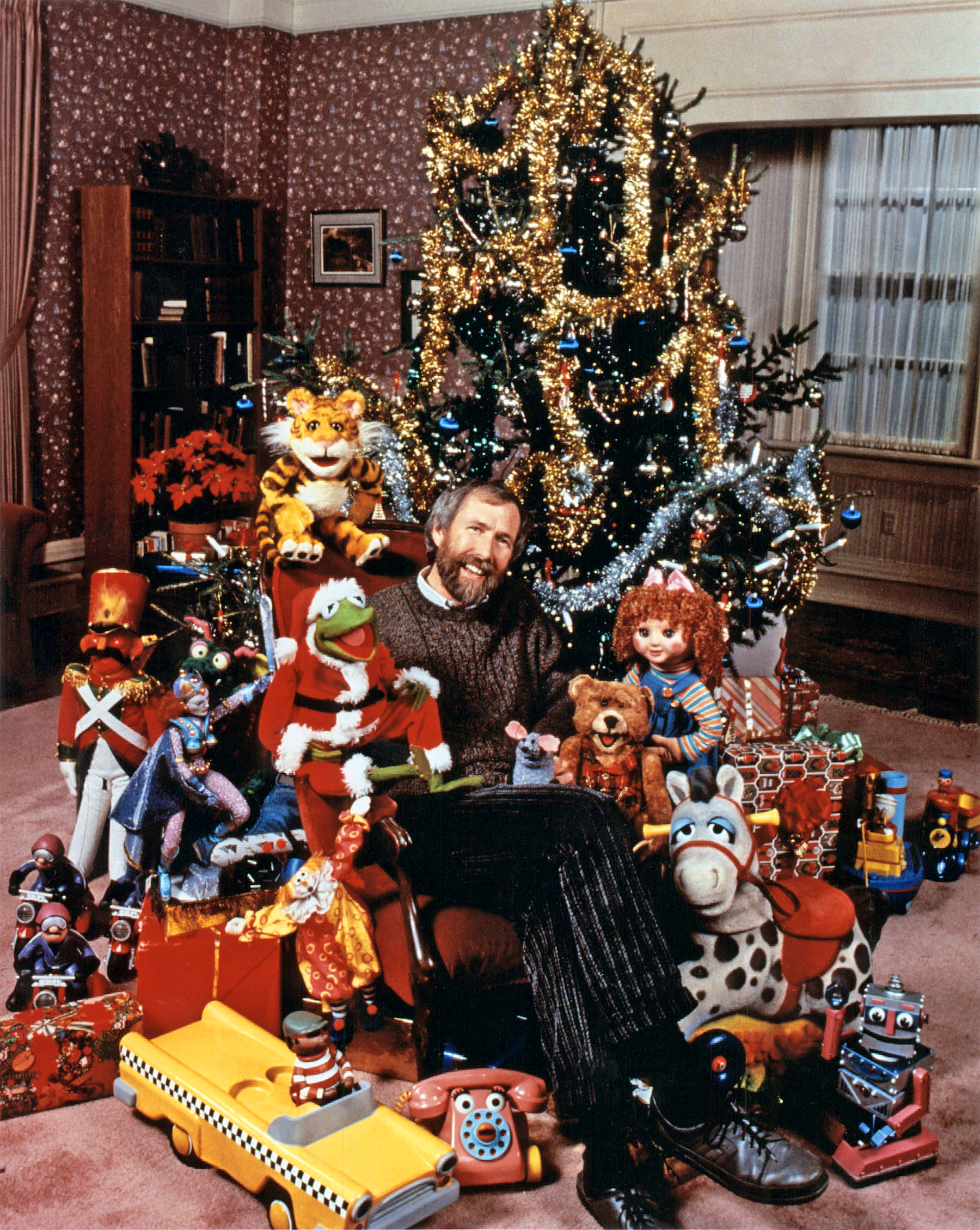
Last year, as part of my Christmas specials retrospective, I provided a fairly in-depth review of The Christmas Toy.  I was afraid of repeating myself as a re-watched the special this year, but, much like the message of the show, there is still life in the old and forgotten.  The story centers around a toy tiger named Rugby who fancied himself to be the best toy in the children's playroom due to being the big Christmas gift last year.  As the next Christmas approaches, Rugby must learn that as time passes, the new becomes the old.  His time in the spotlight will soon be at an end.

Like Rugby, my first review is now a year old, but I shall pull it out again this Christmas to see if my interpretations still remain relevant.  Old material will be in italics to keep things organized.  And now, The Christmas Toy, again!

(The version I watched last year was a home-recorded tape that was uploaded to YouTube.  This year, I watched the DVD version that is available on Netflix Instant.  The major differences are that the Kermit the Frog introduction is cut out, as are the commercials/sponsorship with Kraft Cheese.  But at least the picture and sound and editing fares a lot better.)

Now with better video quality!

It's Christmas Eve, and the toys in the Jones family playroom are preparing for the arrival of new toys. However, Rugby, a stuffed tiger, doesn't quite understand what Christmas means. He was the big present at last year's Christmas, and became the children's favorite toy. He thinks that Christmas is a day to celebrate him, so he plans to sneak back under the Christmas tree with the rest of the presents so that the children can open him out of his box again. The rest of the toys band together to get Rugby back to the playroom before Christmas morning. Not only do they want to spare him is inevitable disappointment, but it's crucial to save his life.

For you see, if a moving toy is found by a human, it will become "frozen" (i.e. die).


And within 5 minutes, the tone is immediately darker than your average Christmas special.

For as rare as this Christmas special is, I was initially let down by the production quality. The actors who play the human family are extremely wooden, the dialogue was very weak, and the storyline wasn't very engaging. In Toy Story, the rules of how the toys live aren't explained, we just accept what we see, and learn things along the way. In The Christmas Toy, half of the dialogue is exposition. Characters say things like "It's a good thing us toys can't feel pain." Who talks like that? All of the toys behave like children, which is understandable since they live in a children's playroom, but it gets annoying when they all state the obvious and need the rules of their world explained to them.

Includes 2 AA batteries, movable parts, and the ability to dispense exposition at the push of a button!

What Henson does best is that he makes fully realized worlds and creates ways to make puppets come alive. In the playroom, there are so many toys moving and walking around, it's amazing to believe that no computer trickery created this effect. It's not a cartoon, it's real.

Allow me to expand on this for a bit.  The design that went into each character is incredible.  Toys, large and small, are uniquely crafted so that they look "realistic" when they come to life.  A few look like simple hand puppets, but the smaller ones incorporate sophisticated technology to allow their mouths and limbs to move.  Ed Christie, a puppet designer, has cited Belmont the Horse as one of his greatest creations, due to the combination of foam and gears to recreate a commonly seen children's toy.

And the kids can actually ride on him too!

Even more surprising is the near constant presence of a floor.  In every Muppet production, there must be some way to conceal the puppeteers.  But in this show, there are many shots showing the puppets walking (or rolling) around the floor and talking at the same time.  I try not to think too much about how these effects are accomplished for I don't want to lose the magic.

It's the 20th Century, puppets can walk now.

All of the toys are owned by the two Jones children, except for Mew, a little catnip mouse. None of the toys respect him because he smells bad and isn't "a real toy." So when Rugby sets off on his journey, Mew is the only one who supports him, because he too doesn't know what really happens at Christmas. Being the only toy who has been out of the playroom (via the cat's mouth), Mew helps Rugby to make sure he makes it downstairs without being frozen. And all the while, Rugby still treats him terribly. Then, after all of the toys convince Rugby to come back to the playroom, and you think the special is over, Mew gets frozen! All he wanted to do was fit in, and he suffers for it. During the whole special, there are corny jokes and cheesy dialogue, yet the foreboding presence of death looms in the background. I feel this special would have been amazing if they trimmed it by half, taking out the unnecessary exposition and focused more on the relationship of Rugby and Mew. That's where the true core of the story lies.

I knew the story before watching the special, so nothing surprised me, even the dramatic turn of events. I was ready to call the whole thing a dud, but then this moment redeemed the whole special for me. Rugby approaches the frozen Mew and sings a song called "Old Friend." It's a very simple song with obvious lyrics about friendship and love, yet it seems so pure the way he sings it. He realizes too late how much he cared for this toy. Mew's death didn't get to me, but the song certainly did.

Old toys, new friends.  Each one is a gift.  Don't take them for granted.

A year later, there is one aspect of the special I wish I had mentioned.  I cut out the section of my review that compared this to Toy Story
 in depth because the similarities are so numerous I do not need to point them all out.  But I'm surprised I failed to mention the importance of one other character.  I was so focused on the relationship between Rugby and Mew, that I ignored another key player: Apple.

Forever alone.

This redheaded doll was originally in Rugby's position, tossed aside as soon as he entered the picture.  She knows the pain of being dumped by those who love you the most and swore they would never forget her.  The ongoing march of time inherently reminds us that there will come a point where everything will be forgotten.  Despite our best intentions, our greatest devotions will cease to be.  Apple learned this and, while hurt, she did not put much weight on the situation.  She used her premature replacement as the primary source of joy to forge new relationships while still being their for her child when she needed her the most.

It is for love that we make sacrifices.  To place ourselves in discomfort or danger to protect those we care about.  Mew sacrificed himself to help a new friend, while Apple sacrifices herself every day, to help an old one.  Although there is no life in a toy, we associate our cherished childhood possessions with having a soul.  It does not matter that their eyes are made of plastic or cotton.  They have eyes and when you look into a toys eyes, you can remember all the times you played with them, all of the adventures you imagined, all of the memories you share.

The toys hold on to these memories for you and never let go.  When we lose a toy, we do not cry for the monetary value that is lost with it.  We cry for the displacement of our memories.  They are extensions of ourselves, keeping our thoughts organized.

As you grow, you may grow tired of many things.  You play with your toys less often and soon not at all.  But every once in a while, it does not hurt to retrieve your old friends from wherever you stored them away.

They are waiting for you.  And they will continue to wait for you.  Year after year.

Loyal friends to the end.

Thursday, October 20, 2011

The Rise and Fall of Bean Norman Bunny, Part 3: Down the Rabbit Hole

All things must come to an end, and for Bean Bunny, the ending came a lot sooner than he had expected.  Bean's puppeteer was Steve Whitmire, who was the youngest to join the original Muppet Show crew.  He was given a variety of new characters to perform, such as Rizzo the Rat and Wembley Fraggle.  It seemed as if Bean would be his breakout hit, but just as the bunny started gaining attention, Jim Henson unexpectedly passed away.  Whitmire was assigned to take over Jim's biggest roles, namely Ernie and Kermit the Frog.  Bean Bunny was forced to become an afterthought, because Whitmire's new schedule only allowed him to play the important characters.

However, Bean Bunny was not simply ignored.  He became the unwilling victim of all the negative feelings of the collective Muppet Company.  At first, he was just given minor, usually-non speaking roles.  His biggest role in a Muppet movie to date is the poor, starving child in The Muppets' Christmas Carol.


How the mighty have fallen

But malnutrition and neglect were not the only pains this rabbit had to endure.  Having grown tired of his "cute" schtick, any excuse would be made by the producers to deliver abuse to the poor bunny.  He would become the punchlines of scenes, literally.  He would get smashed by doors, trampled on, or eaten whenever he made an appearance in a future filmed Muppet event.

As Brian Henson noted, "Inside the Muppet Company, we love to hate Bean Bunny."

Even in non-live material, Bean Bunny got the short end of the stick.  In one "Muppet Kids" story book, Bean (who is still the same age he always is) moves into the Muppet community and is shunned by everyone else.

I miss the Bunny Picnic.

In certain ancient/unmodernized societies like the Romans or some aboriginal tribes, punishment for a terrible crime would result in banishment.  Basically, people would be forced to live on the outskirts of the community and, while they would be protected and helped in times of emergency, they would not be invited to partake in the society's events and customs.

But for even WORSE crimes, the guilty party would be forced to stay and participate in all of the society's events.  However, everyone else would ignore them.  Shunning in its purest form.  This was considered to be harsher than banishment, and was stopped by the federal law in Amish communities for being "cruel and unusual punishment."

The Muppets have shunned Bean Bunny.  He is allowed to appear in everything they do, but he is not included in the fun.  He is shoved to the background, and only brought forth to be humiliated.  Bean's only crime was being himself, an attribute that was widely celebrated and encouraged for a couple of years, and then it became the cause of all his torment and anguish.

Too much of a good thing can have unfortunate consequences.  Just look at all of the celebrities whose lives have been ruined because we could not accept just a small amount of their talents.  Britney Spears, Lindsay Lohan, Ted Williams (the homeless man with the golden voice).  These were all people who had a gift, had that gift exploited, and then turned into beaten washed up versions of what they once were.

The Muppets should have been immune to this sort of thing.  They are living cartoons.  They're personalities and lifestyles rarely change.  But the audience can change.  And in this case, a harmless little bunny rabbit took the bullet.

R.I.P. Bean Bunny's career (1986-1990)
Simpler times.  Cuter times.

Wednesday, October 19, 2011

The Rise and Fall of Bean Norman Bunny, Part 2: Overexposure

After The Muppet Show had been off the air for years, Jim Henson hoped to try a new style of television to show off his new creations and experiments.  The show was dubbed The Jim Henson Hour and it each episode would be made up of two parts (usually).  The second half would focus on a story or special involving Henson's Creature Shop, usually old episodes of The Storyteller or something new like "Dog City."  The first half would be called "MuppeTelevision" and would run like The Muppet Show.  There would be sketches, songs, and guest stars but the segments would be shot as if the Muppets ran a television studio rather than a theater.  Many new characters were brought in as lead roles to perform along side familiar favorites like Kermit, Piggy, and Gonzo.  But to draw in the younger demographic they needed Bean Bunny.

To quote Kermit, "We hired Bean to be cute so the rest of us don't have to bother."

The cast of "MuppeTelevision"

Unfortunately, the show struggled to build an audience in the primetime hours, and one of the last episodes that aired confronted the ratings disaster head on.  It was soon discovered that ratings were at their highest whenever the show featured sex, violence, or Bean Bunny (or a combination of the three).

And so, Bean Bunny was shoehorned into as many sketches as possible to maintain an audience.

Leading to horrible abominations such as these.

However, Bean's presence could not keep the show afloat, and soon it was cancelled.  This setback did not hinder his fame, though.  It allowed him to move to the forefront of the action partaking in many other endeavors.  As the Muppets started joining forces with the Walt Disney Company, Bean Bunny was first in line to reap the benefits.

Doing whatever it takes to rake in the dough.

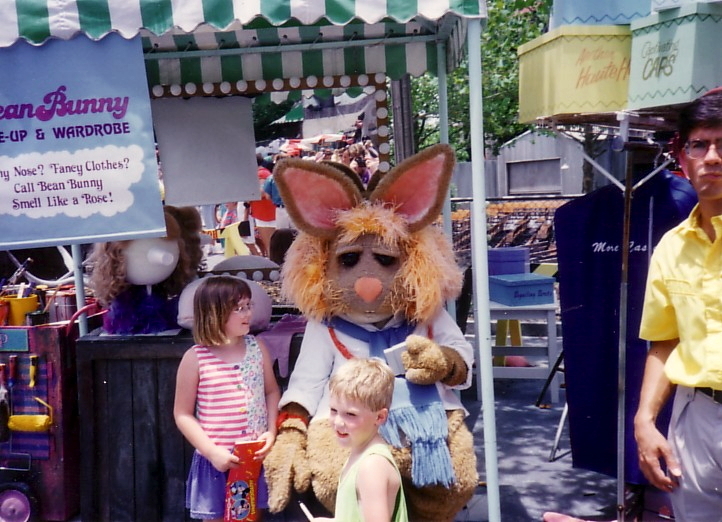
He became one of the stars of "MuppetVision 3-D," a Disney Parks attraction that still runs to this day.  Thanks to excellent timing, Bean Bunny has gained immortality due to the wonders of the third dimension.

Not so little anymore.

Bean Bunny was so omnipresent that he even arranged to join the cast of the Muppet Babies!  The logic that all of the Muppets knew each other as toddlers was stretched pretty thin to begin with, but then to add in a character who was deliberately a child when he was introduced to the Muppet family and say that he was a baby with them as well?  Well now you're asking too much of us!

On top of that, he's the only one who is toilet trained!

Bean Bunny was on top of the world.  At this point, anything was possible.  The world was his carrot patch and he could have been on Easy Street for the rest of his life.  Sure, he was being used for his cuteness, but he did not care.  Everything was coming up Bean Bunny.

But as with most child actors, the initial charm fades, and the antics do not seem as cute anymore.  He was on a path towards destruction, one that he could not have foreseen.  The bigger they are, the harder they fall.  And Bean Bunny was about to hit rock-bottom.  Join us tomorrow as we learn about the tragic aftermath of the young kit who had so much potential and promise.

Play us out Bean (jump to 11:42):


Tuesday, October 18, 2011

The Rise and Fall of Bean Norman Bunny, Part 1: Humble Beginnings

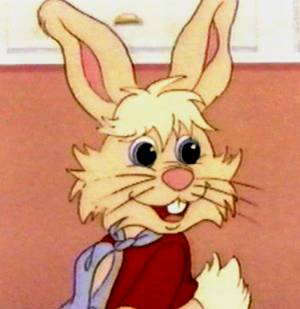
Late in Henson's career, there arose a young new Muppet eager to join the well-established cast of The Muppet Show.  The main crew had fixed themselves as stars in the eyes of the world, but there was one area in which they were sorely lacking: Cuteness.  Kermit's nephew Robin was young but had a complex maturity that did not resonate with children.  Meanwhile, on Sesame Street, a furry red monster named Elmo was making waves, preparing to take the street by storm.  As his popularity was rising, the Muppets needed someone who could balance out their ensemble.  Someone who was their "Elmo."  And so, the Henson crew turned to a little fuzzy face that had already made a name for himself in the saccharine television special "The Tale of the Bunny Picnic."

Bean Bunny, the littlest rabbit

While on an afternoon stroll with his daughter Cheryl, Jim Henson observed a group of rabbits convening, seemingly in the midst of an important discussion.  Suddenly, a large dog appeared and scared them all off.  He was inspired to create a springtime special focusing on the backstory of that random cute event.


Below is the full hour-long special, but I shall provide a summary for those who are allergic to an overabundance of cuteness.


As the story goes, to celebrate the arrival of spring, a large group of bunnies hold the annual Bunny Picnic.  They leave in a peaceful warren, close to a farm stocked with many delicious vegetables.  The mean old farmer, in an attempt to rid himself of the rabbit infestation, adopts an dog to kill the rabbits.  The dog is disrespected and mistreated by his master, as evidenced by the fact that he is not even bestowed with a name.  He tries his best to carry out his duties, but has many difficulties.

The Dog, both the main villain and victim of the tale

In the community of bunnies, everyone has a role to play.  Everyone contributes to the picnic, save for little Bean Bunny, who is shunned by his older brother Lugsy for being too small to help.  In order to avoid the negative criticisms of his size, Bean disassociates from reality, imagining himself to be anything but a little rabbit.

Even when he turns into a menacing dragon, he can't help but be adorable.

Bean is the first to discover the dog and no one else believes him.  But once the dog attacks, Bean uses his clever imagination to come up with a scenario to rid the warren of the beast.  Everyone pitches into help, but his bigger brother takes credit for all of the work and places himself in charge of the proceedings.  But when Lugsy gets captured by the dog, it is up to Bean to step in and prove that being little does not prevent him from doing great things.

Such as scaring off a dog in a giant bunny costume.

I do not want to spoil the climax (the huge fake rabbit is just the beginning of things), but after all is said and done, Bean Bunny is treated as a hero to his people and finally earns the respect he deserves, especially from his older brother.

He is a savior to us all!

Bean Bunny enjoyed his new fame and hoped to live out a peaceful existence in the warren, having served his purpose and made a name for himself.  But fate had different plans in store for the young buck.  His audience demanded more.  Very soon, he would be ripped from the warm rabbit den and thrown into the world of television, hype, and success, unlike anything he had ever dreamed of experiencing.  The power would soon go to his head.  His fluffy cottontail would be marking his territory all over the Muppet landscape.  This would not be the last we saw of that little pink-nosed bundle of joy.

Tomorrow, we will continue our look at one of Hollywood's most tragic stories of abuse, corruption, and self-destruction as Behind the Muppets continues.