As part of the initial 1990 Disney-Muppet merger, the Henson Company began production on a spinoff of the hit 1989 animated film The Little Mermaid. Disney was using this movie to reinvigorate the creatively lackluster company and knew that it would spark a huge change in the entertainment world, so they had to get as much use out of the franchise as possible. And one idea was to have a life-action show detailing the adventures of young Ariel and her friends called Little Mermaid's Island.
"Title Sequence in Development" - The glorious intro to this wonderful treat.
Only two shows were produced before Henson (and others) determined it to be unworthy of support. Also, Henson's premature death put the whole relationship on hold, which didn't help this struggling little show at all. But, in checking the footage available, it's clear that it wasn't the quality entertainment we had grown to expect from Disney or Henson.
The show attempted to bring back all of our favorite characters, along with some of the original voice cast, to tell silly little stories that were not at all like the movie. As seen in the clip, Flounder (and his new twin sister Sandy) sing about making a mess and respecting others' property before getting manipulated by Flotsam and Jetsam into messing with Ariel's things again.
All while swimming against an obvious green screen.
Ariel, despite being young and naive in the original, adopted more of a motherly role while the puppets got into various hijinks. The only other human in the show was Grimsby, who was not at all like his animated counterpart. But at least the other animated characters translated well into puppet form.
Like Sebastian the Crab...
...Scuttle the Seagull...
...and Scales the Dragon?!
Yes, there was a dragon now. I guess mermaids weren't enough of a supernatural entity for this show.
At any rate, clearly the show could not live up to the potential of it's predecessor and it eventually was reworked into an animated series in 1992 that had the exact same premise but much better execution. It turns out that, despite best intentions, humans and mermaids don't mix, and it's best to leave some things under the sea.
Due to the overwhelming popularity of The Muppet Show, Henson decided it was time to talk to the biggest name in entertainment: the Walt Disney Company. By the 1980s, the Muppets had become an unstoppable brand and, with Henson's growing passion toward non-Muppet related projects, he wanted to make sure he could keep the Muppets afloat without his assistance. So, he turned to then-president Ron Miller and senior executive Roy Disney to discuss a possible merger between the two companies. At this time the Muppets were rivaling Disney in terms of audience numbers, as the Disney Studio was going through a major creative slump in both their animated and non-animated films. A Henson-owned Disney studio was a very possible scenario.
This idea was put on hold and did not resurface until Michael Eisner took charge of the company. And he was a lot less interested in the deal. When he was in charge, the Disney films were just about to start winning back audiences (with Who Framed Roger Rabbit and The Little Mermaid in the pipelines) and the demand for Muppets had died down since the end of The Muppet Show. Henson stayed in contact with the company, and a merger was no longer part of the equation. But a buyout was. This was fine for Henson, as he knew the Muppets would be in good hands. But Eisner wanted the rights to all Muppet franchises, including Sesame Street. For Henson, that was out of the question.
As the ties between the Muppets and Disney were becoming tighter, Henson helped develop many Muppet-related productions for the Disney Studio. This would begin with a complete overhaul of the Disneyland and Walt Disney World Resorts. For one year, Disneyland would become "Muppetland," and every attraction would get a Muppet overhaul while the Disney characters "took a break." Down in Florida, more permanent Muppet attractions would be added, including a parody of Disney-MGM's "The Great Movie Ride" called "The Great Muppet Movie Ride," a Gonzo-owned "Pandemonium Pizza Parlor" with animatronic rat waiters, and a 3-D movie Muppet*Vision 3D. Eisner, was willing to make the merger official, even without the Sesame Street puppets, with all of these great projects lined up.
Eisner and Henson, about to embark on a new journey.
But, unexpectedly, Henson died mere days before the contract was to be signed.
Drawn by Disney artistsJoe Lanzisero and Tim Kirk
Almost every Disney Park project got scrapped, save for Muppet*Vision 3D, which had already been filmed, and a promotional special celebrating the merger entitled The Muppets at Walt Disney World.
Where dreams come true...
This hour-long special was the final Muppet-related production seen by the world before Henson's death, airing 10 days earlier. The special takes on an odd sense of poignancy due to that fact. It appears to be Henson's actual farewell to his Muppets.
Henson, on location, filming one of his last specials.
The story opens with Kermit gathering all of his friends and returning to his home, the swamp. He hopes to show them his roots, taking them back to the simple pleasures he had before going to Hollywood and becoming a star. But when the Muppets learn that Disney World is nearby, they choose to visit the park, much to Kermit's dismay.
Without any tickets, the group sneaks in and separates, as a dim-witted security guard spends the hour trying to track them down. And, our villain is once again played by the great Charles Grodin.
Always a pleasure.
Each character has their own adventure and somehow they manage to bounce around all three parks (Magic Kingdom, Epcot Center, and Disney-MGM Studios) without any trouble. Fozzie tries out some comedy in Frontierland and is ultimately welcomed by the Country Bears. The Electric Mayhem goes on a "world tour in a day" at Epcot. Bean Bunny is cute. Miss Piggy gets dragged onto every ride by Beauregard. Rowlf gets put in the pet care facilities. Beaker gets a bucket stuck on his head. And Animal stalks his prey:
It's weird how they let Animal behave this way in a Disney special.
My favorite part is Gonzo's story, as he becomes enamored with the "less picturesque" aspects of the park. He ends up in the sewers, the off-limits structural portions of rides, and the giant laundry room. I must admit, I am a Disney Park fanatic and the rarely let anyone behind the scenes like this. This story kind of sums up the specials attitude towards Disney World as a whole. Everyone has a negative perspective of the park (except Gonzo, how insists that the best parts of the park are the trash cans). This seems to have been hinting at Henson's own feelings with the corporate entity as a whole and Kermit in particular has a rotten time because of it. Until little Raven-Symone shows up.
By the end, everyone reunites and the Muppets get to meet Mickey Mouse in person. They all join in song talking about the wonders of dreams, and we get a shot of Mickey and Kermit with their arms around each others shoulders solidifying the new deal.
Alas, fate threw a wrench into the Disney-Muppet plans and the Muppets were aimless for a while. The Disney Studio unofficially adopted them for the next decade, overseeing the distribution rights of past Muppet projects, developing new television programs like Dinosaurs and Muppets Tonight, and releasing a couple movies through their production studios. Finally, in 2004, the Muppets became official Disney property.
You can see them there, behind Pinocchio and the Dalmatians.
The Muppets were now a part of the Disney family. As a result, the Muppet Workshop was no more and new Muppet construction would be handled by the Disney owned Puppet Heap and all Muppet productions were now a part of The Muppets Studio.
Jim Henson's Creature Shop remains a separate entity and they now handle all Sesame Street puppet construction. They have also branched out in to producing other material that would have originally been considered Muppet territory. Because of legal reasons, the new "Muppets" created by the Creature Shop are officially "Creatures," abandoning the once clear division between exaggeration vs. realism.
"Muppets," under Disney, now solely refer to the cast of The Muppet Show and related materials. Although Disney holds the distribution rights to past Muppet movies and Fraggle Rock, thus far, the only Muppet productions have been centered around Kermit and his pals. While the technical "Muppet" term still applies when referring to the Sesame Street puppets, officially, "The Muppets" refer to one distinct group of characters.
While it seems as if Henson's Muppet legacy has been swallowed up by the Disney giant, it's important to remember that this was actually part of Henson's plan. It came 14 years behind schedule, but Henson's vision was ultimately, fulfilled. So, if anyone asks you what a Muppet is, don't get worried about the semantics of "Creatures" or "fancy puppet" or "Sesame Street" or "Disney-owned."
A Muppet is someone who inspires, entertains, loves, and dreams.
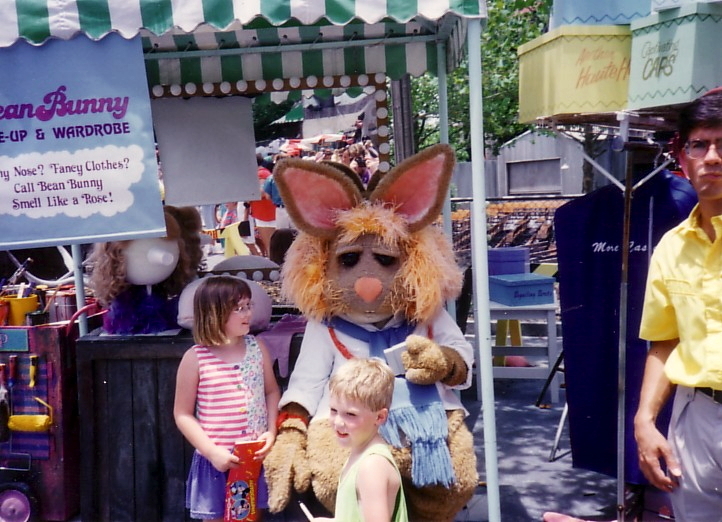
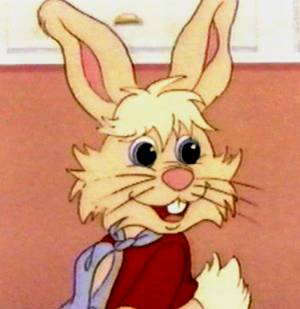
After The Muppet Show had been off the air for years, Jim Henson hoped to try a new style of television to show off his new creations and experiments. The show was dubbed The Jim Henson Hour and it each episode would be made up of two parts (usually). The second half would focus on a story or special involving Henson's Creature Shop, usually old episodes of The Storyteller or something new like "Dog City." The first half would be called "MuppeTelevision" and would run like The Muppet Show. There would be sketches, songs, and guest stars but the segments would be shot as if the Muppets ran a television studio rather than a theater. Many new characters were brought in as lead roles to perform along side familiar favorites like Kermit, Piggy, and Gonzo. But to draw in the younger demographic they needed Bean Bunny.
To quote Kermit, "We hired Bean to be cute so the rest of us don't have to bother."
The cast of "MuppeTelevision"
Unfortunately, the show struggled to build an audience in the primetime hours, and one of the last episodes that aired confronted the ratings disaster head on. It was soon discovered that ratings were at their highest whenever the show featured sex, violence, or Bean Bunny (or a combination of the three).
And so, Bean Bunny was shoehorned into as many sketches as possible to maintain an audience.
Leading to horrible abominations such as these.
However, Bean's presence could not keep the show afloat, and soon it was cancelled. This setback did not hinder his fame, though. It allowed him to move to the forefront of the action partaking in many other endeavors. As the Muppets started joining forces with the Walt Disney Company, Bean Bunny was first in line to reap the benefits.
Doing whatever it takes to rake in the dough.
He became one of the stars of "MuppetVision 3-D," a Disney Parks attraction that still runs to this day. Thanks to excellent timing, Bean Bunny has gained immortality due to the wonders of the third dimension.
Not so little anymore.
Bean Bunny was so omnipresent that he even arranged to join the cast of the Muppet Babies! The logic that all of the Muppets knew each other as toddlers was stretched pretty thin to begin with, but then to add in a character who was deliberately a child when he was introduced to the Muppet family and say that he was a baby with them as well? Well now you're asking too much of us!
On top of that, he's the only one who is toilet trained!
Bean Bunny was on top of the world. At this point, anything was possible. The world was his carrot patch and he could have been on Easy Street for the rest of his life. Sure, he was being used for his cuteness, but he did not care. Everything was coming up Bean Bunny.
But as with most child actors, the initial charm fades, and the antics do not seem as cute anymore. He was on a path towards destruction, one that he could not have foreseen. The bigger they are, the harder they fall. And Bean Bunny was about to hit rock-bottom. Join us tomorrow as we learn about the tragic aftermath of the young kit who had so much potential and promise.