Showing posts with label muppetelevision. Show all posts

Tuesday, August 21, 2012

The Vacation's Over

After losing both Jim Henson and Richard Hunt, the Muppets dropped off the radar, and stayed off until 1992 when The Muppet Christmas Carol signaled their return.  And while the movie was fun, the Muppets took somewhat of a backseat to the story, so the next few years were spent building up excitement for a true comeback of our favorite characters.  1996 was going to be the big year, featuring not only another feature film, but also the premiere of an updated version of The Muppet Show.

So what did they do during those three years in between?  They had a vacation.

Let's all go to the beach and never come back!

The first major Muppet project after Christmas Carol was also the first Muppet music album comprised of purely original material (as much as covers of songs can be considered original).  The newly formed Jim Henson Records released three new albums.  One was a collection of classic songs featured on previous television and movie soundtracks, one was a previously unreleased album featuring Henson as Rowlf covering famous Muppet tunes, and the third one was the actually new "Muppet Beach Party."

And it's.....not so great.

I kind of wish I had chosen to review the Rowlf album instead.

Last summer, a couple of the contributors of ToughPigs.com reviewed the album and their assessments ranged from "tolerable" to "terrible."  Both reviews are worth checking out, especially since I was unable to locate all of the songs for download (and unwilling to buy a $74 copy from Amazon).

The "story" of the album is that the then-current Muppet gang (Kermit, Piggy, Gonzo, Fozzie, Animal, Rizzo, and Clifford) go on vacation and sing as many beach-related songs as possible.  A common complaint is that usually one Muppet will sing while another would interject with his or her commentary after every line to make it "funny" or "annoying."  Songs without much Muppet interference, such as the Rockapella version of "Papa Oom Mow Mow" fare the best.  Although one wonders why include Kermit and Clifford at all, since this is the only song not sung by Muppets.

The most egregious example of this "unnecessary Muppet dialogue" is in the final song "Wipeout" by the Surfaris which is a mostly instrumental piece.  So of course, to make it "Muppet-y," Animal just shouts "WIPEOUT!" over the music repeatedly.


Yes, that was the official music video for the song, which was the album's second single.  The first single was far less painful, though.  Steve Whitmire as Kermit performed "Kokomo" by the Beach Boys.  Regardless of your musical tastes, this song choice is probably one of the best on the album and the accompanying music video isn't half bad (especially since the album version features Piggy cooing over Kermit throughout the whole song, just to remind us she's there).


The song describes a fictional island paradise known as "Kokomo" which is supposed to be the ultimate vacation spot.  A tropical getaway where two can relax, play, and fall in love.  It is the ideal dream, what most of us wish for when we picture a perfect place on Earth.  It is fitting that Kermit would dream to visit there and that Piggy would inevitably cause stress and pain on his vacation.  Because eventually, you have to return to the real world.

Alright guys, time to stop pretending we are actually at a beach.

There's only one problem with the Muppets' "Kokomo," though.  They had already done this song four years earlier.  Except it was an original song called "Sweet Vacation."  And Jim Henson was singing it.  In fact, if you turned off the sound to both of these videos, you would have a hard time telling them apart.


You'll notice that "Sweet Vacation" features the cast of MuppetTelevison because this was actually the closing number to the "Monster Telethon" episode where the gang decides to try their hand at hosting the show and running the studio, giving Kermit a much needed vacation.  And by the end, they decide to just join him on his vacation, because it beats having to clean up the messes they made while he was gone.

Also you'll notice that this song is great.

Because, unlike the "Kokomo" video, the vacation in question isn't some impossible ideal dream.  It can apply to any relaxing moment with friends.  Just the relief that comes from taking a break is all one needs in having a good time.  This is a vacation that can occur anywhere at any time.  Plus, Piggy doesn't show up at the end to cause misery and suffering.

"Muppet Beach Party" reeks of a cash-in novelty album hoping to recapture the fun of the Muppets, but it instead falls short and reminds us of the greatness we are missing.  The songs seem hollow and without passion.  The zaniness feels forced.  The whole ordeal just feels wrong.  The fact that an entire album can be eclipsed by one song says a lot.  In a few minutes, "Sweet Vacation" gives us every thing we need and want out of a summer of Muppet recreation.

It may be short and sweet, but this vacation is endless.

Sunday, August 19, 2012

Random Muppet #14: Merlin's Assistant

On the Muppet Wiki, there is a "Random Muppet" button which sends you to the page of one of the thousands of Muppets in existence. I will press the button and discuss the importance of the Muppet that comes up, no matter how obscure. No skips. No redos. This is the Random Muppet Challenge.

Random Muppet #14: Merlin's Assistant

A sorcerer's apprentice who is only there to make her boss look good.

Performer:  Fran Brill

Muppet Universe of Origin:  MuppeTelevision

Most Significant Appearance:  The Jim Henson Hour, July 16, 1989, "Episode 107: Health and Fitness"

"MuppeTelevision" had many similarities to The Muppet Show, one of which was the batch of recurring segments called "Merlin the Magician, M.D."  This sketch was a spiritual successor to "Veterinarian's Hospital," with the setting changed to medieval times.  Instead of Dr. Bob, Rowlf now played Merlin and he would treat patients with a more spiritual (and outdated) method of cures.

Only Rowlf could make a beard look good on a dog.

Rowlf was not joined by his nurses Piggy and Janice this time around (probably because Frank Oz and Richard Hunt weren't part of the full cast for the show), so instead he was joined by a nameless assistant voiced by Fran Brill.  And, much like any magician's assistant, she only served to draw attention to Merlin's "tricks."  Except his tricks were more puns and punchlines, so she would emphasize each joke with a "Ta-da!"

In the couple times that this sketch appeared, Merlin's assistant would announce the patient and their ailment (which always seemed to involve something stuck in their head).

How does one even get a fish in the head?

During the second (and final) sketch, Merlin began to grow weary of his assistant's "Ta-das!" and tried to get her to cease this annoying habit.  Even she began to grow weary of her role, uttering her final "Ta-da!" completely out of breath.

Why Is She the Most Important Muppet?

Merlin's assistant combines two familiar sound cues to trigger a response from the audience.  "Ta-da!" is usually said right after something amazing or impressive has occurred while a joke is punctuated with a drum sting (sometimes called a rim shot).  In both of these cases, the sound lets the audience know that the goal of the performance has been achieved and it is time for them to react.

When it comes down to it, these sounds should be completely unnecessary.  If the preceding event is so great, shouldn't the audience respond naturally?  A sound cue just assumes that the audience isn't intelligent enough to pick up on the humor on their own, so it provides a familiar noise so that the audience can respond at the appropriate time.

Merlin's assistant's job is even more useless because, not only are the punchlines painfully obvious, but an actual musical sting underscores her "Ta-das," making her pointless task redundant as well.  Take that away, and she has nothing to do but stand there and look pretty while the magician does all the interesting stunts.

For my next trick, I shall pull a bloody sword out of a dying knight.

The role of a magician's assistant has undergone heavy scrutiny during the years since its inception, with many pointing out that the assistant is often put in situations of "peril," invoking the "damsel in distress" routine.  The assistant's presence only reinforces a notion that women are subservient to men and incapable of helping themselves.

While some assistants have gone on to receive top-billing in their magical acts by becoming more involved in the "magic" process, Merlin's assistant appears to have gone in the other direction.  She doesn't interact with the tricks in anyway, mostly keeping her distance.  And when she does come on screen, she just bothers Merlin.  The sketch and the patient would be just fine without her.

Merlin's assistant may be the most unnecessary Muppet created.  And, for that reason, she is important. It's not that we don't want her.  We want her life to be better.  We want to see her do something worthwhile.  We want to see her hone her skills.  Surely she can do more than just say "Ta-da!"  She is the assistant to a genuine wizard!  There is so much she can learn and so much she can offer.

Tragically, her days on television ended when the show was cancelled.  We never did get to see what she did after this.  We don't know if her life got better or worse.  We can only guess.

But there is one silver lining that came from all of this.  From this day forth, we can never hear the phrase "Ta-da" again without thinking of her.  She has a legacy now.

Monday, August 13, 2012

The Valley of the Dolls

If the Toy Story movies have taught us anything, it's that a child's relationship with his or her toys is crucial to their development.  Andy's playtime consisted of fantastical adventures with heroes and peril. His neighbor Sid would destroy toys, hinting at a sadistic personality.  And then there was Sid's sister Hannah, a quiet girl who would use her mutilated toys to host pleasant tea parties.  These three styles of playing were very stereotypical representations of how toys relate to gender roles.  The boys were adventurous and/or destructive while the girl was peaceful.  Like many girls, her dolls were ideal representations of how she saw herself.  Hannah's dolls were physically damaged, yet they persevered.  It kept her grounded.

Barbie dolls, on the other hand, have received much criticism for perpetuating negative body images among girls.  Impossible to achieve figures and a devotion to clothes and shopping implied that those who played with them would grow up with a distorted set of values.  To counteract these claims, Barbie started receiving many high-powered career makeovers.  The message was supposed to be that girls could grow up to be very important members of society, rather than beauty-obsessed consumers.  Others interpreted the marketing decision as an excuse to sell more outfits.

This brings us to "Bootsie and Brad," the best thing to come out of "MuppeTelevision."  Instead of Muppets, these segments featured human actors playing the roles of Barbie-and-Ken-like dolls inside a little girl's dollhouse.

Small Muppet dogs are sold separately.

The little girl Amanda would remain in the background while her dolls played out scenes straight from her imagination.  Bootsie and Brad would talk and walk stiffly and spout strange, yet clever dialogue.  The would parody elements of Barbie's glamourous lifestyle while retaining that sense of naivety that comes with a child's imagination.

For example, in every episode Bootsie would sport a new outfit and occupation, while Brad remained in his basic outfit, implying that the little girl bought more outfits for the girl doll.  Brad would often feel bad when he'd realize that he'd never get to do as many cool things as Bootsie.  Despite managing to achieve an endless number of high-paying jobs, Bootsie would remain vacant and ditzy as she interacted with Brad, suggesting that the outfits can change, but the character doesn't.

It's tough sharing a house with a billionaire, astronaut president of the United States.

In one episode, Bootsie throws a tea-party for the other toys.  Brad finally gets a chance to try out his only other outfit, his party suit.  However, he still manages to feel inadequate next to Bootsie's other guests, a Sergeant Killer Death Machine action figure and a Talking Teddy who requests kisses whenever somebody pulls his string.

Talking Teddy is a homewrecker.

But the absolute best segment appears in the episode "Garbage" where Bootsie and Brad decide to pretend they are married.  There is so much wrong in their behavior which makes this segment so right. The two speak with hokey dialogue and act out situations that Amanda must have seen her parents do a number of times.  This then blends with the "independent female spirit" that Bootsie dolls are supposed to convey.  For example, when Brad gets "upset" at Bootsie for buying new outfits with his hard-earned money, Bootsie counters that she used her own money from her job as an oil sheikh.

And their discussion about the anatomical difference between boys and girls is just precious.

This whole bit reminds me of the Calvin and Hobbes strips that featured Calvin's neighbor Susie's forays into imagination.  They would be presented as soap opera comics with childish dialogue as Calvin would usually try to escape the situation.  Despite bringing an air of maturity to Calvin's playtime, Susie was not above making her own illogical leaps.  A child's mind can open infinite worlds of possibilities.


Each "Bootise and Brad" segment was a gem and perfectly captured the battle of reality and fantasy that occurs when a child sits down to play.  Amanda's dolls showed us how important society is to our development.  Children imitate what they consider to be "appropriate" behavior based on the adults in their life and the media they consume.  Barbie herself may not be the best role-model, but it's up to the child to decide what morals they learn from her behavior.  Bootsie and Brad may have been the focus of these sketches, but little Amanda was the star.  The toys were just the gateway to her mind.

Through their lifelessness, we saw life.

Sunday, August 12, 2012

Hijacking the Airwaves

It's sad when television shows are cancelled before they have a chance to develop.  Producers make shows with the hope of being the next big cultural phenomenon.  Brand new exciting characters that people want to hang out with on a weekly basis are introduced.  But, just as with real people, first impressions aren't always the best.  Sometimes the most interesting people take time to get to know.  Not everyone chooses their best friends the first time the meet them and most classic television show characters didn't necessarily wow audiences due to their first appearance.

One recurring segment/cast of characters that showed the greatest untapped potential on "MuppeTelevision" were the "visits" from the underground television station known as "Gorilla Television."  Muppet Central was supposedly the location where Kermit could pick and choose the content from all around the world.  Gorilla Television was the opposite, a sanctuary for the unloved aspects of television that the general audience deemed inappropriate.

A trio of renegade Muppets would use their pirate television station to present content that was anti-establishment, anti-wholesome, and anti-Henson.

What a bunch of Gen-X hipsters.

Paradoxically, even though Henson is nearly synonymous with bizarre counterculture entertainment, his Muppets had definitely become mainstream by 1989.  Gorilla TV was going to take that back.  They were going to remind us that the Muppets were weird.  Their leader Zondra was a representative of the goth subculture that was taking shape during the '80s.  Her feminist ideals and rallies against authority made her the perfect Muppet to lead this charge.  She specifically lambasted Jim Henson's character, feeling that his popularity has caused other puppeteers to sit in the shadows, unable to break into the limelight.  As part of her crusade to "fix" television, she would invite other puppet acts to perform in her studio.

The noble goth, Zondra.

Her first guest was comedian Marc Weiner, who disagreed with Zondra, claiming that he admires Henson.  Still, this was basically a frame to allow more puppeteers to take the stage, something that Henson clearly wanted to highlight.

In a later appearance, Zondra, along with her cameraman Chip and her partner Ubu, kidnaps a woman and forces her to watch mainstream television commercials to show how television brainwashes us to become mindless zombies bent on consumerism.  Unfortunately, Ubu also falls victim to the glow of the screen and frees the captive so they can go take advantage of the great deals at the supermarket.


Judging by the promotional materials for the show, Zondra, Ubu, and Chip were supposed to be main characters, and would quite possibly become the Muppets' main antagonists.  Despite only appearing in two episodes, they were signs that the show had lofty goals.  Being placed in the position of television pirates, Zondra and her crew could both introduce and mock concepts that would normally not be discussed in a regular Muppet show.

The American public missed out on a new breed of Muppets, some who could have gone on to become classic characters in their own rights.  Just as The Muppet Show had Sam the Eagle to represent the conservative far-right, "MuppeTelevision" had Zondra and Ubu to represent the radical far-left.  Both parties would antagonize our heroes, but neither were outright villains.  Like all Muppets, there is a sense of fun and admiration for the concepts they were poking fun at.  Perhaps their inclusion represented a tonal shift in our culture's climate, but they were still valuable characters nonetheless.

So, before we dismiss media too quickly, perhaps we should give it a chance to find its bearings.  There are many fantastic characters out there, just waiting to be loved.

Just don't let these pirates intimidate you.

Saturday, August 11, 2012

Beware the Yuppies

During the 1980s, a new species emerged.  They could be easily spotted by their V-neck sweaters, their disenfranchised outlook on life, and their affluent wealth.  The baby boomer generation were no longer cute, numerous babies.  They were now thirtysomething.  They had grown into young, urban professionals.  They were the "yuppies."

And they were starting to multiply.

Raised by a generation of hippies, the yuppies sought structure and meaning in their lives.  Many of them found lives as lawyers, brokers, and professors, earning high-paying salaries and unsure of what to do with themselves.  To the non-yuppies, yuppies were self-absorbed and unsatisfied with their lives, despite the fact that they had found themselves in positions that many Americans would consider to be the ultimate dream.  A well-structured family living in a peaceful neighborhood would make almost anyone comfortable.  But the yuppies needed more.

The quintessential depiction of yuppie life in popular culture was the drama thirtysomething, emphasis on drama.  This allowed us a look into these creatures lives, allowing others to experience the problems that they encounter in their daily lives.  I would direct you to a specific episode, but honestly, all you need to understand their lifestyle is the opening theme, which I've dubbed "Suffering in Suburbia."


"MuppeTelevison" was not only an extension of The Muppet Show.  It set out to skewer current television trends.  So of course, they were going to comment on this growing culture, and they did so with the pitch-perfect parody "Hurtingsomething."

Prepare to be tortured.

The premise was simple: take thirtysomething and replace the cast with giant monsters.  In all forms of Muppet media, the monsters are used to represent some aspect of humanity.  In Sesame Street, monsters are children trying to get a handle on the world around them.  In The Muppet Show, monsters are our sins, pushed to the extreme.  In Fraggle Rock, monsters are those who abuse power.  And now, monsters are yuppies.

The monsters Anthony and Fern don't act like previous Muppet monsters.  They don't snarl or destroy or speak in mono-syllabic grunts.  They are intelligent and insightful and they just happen to snack on humans now and then.  In the first sketch, as Anthony and Fern prepare for bed, Fern shrieks when she discovers a tiny human that has crawled into the sink.

Anthony catches the tiny lawyer in a glass and proceeds to jokingly scare Fern with it before releasing it outside.  They then have a long conversation about how Anthony's immaturity trivialized Fern's fears, which only adds to the stress of her daily struggles as an independent woman.

It's time for our nightly in-depth conversation about our feelings.

In a later sketch, Anthony reveals that his therapist as instructed him to stop bottling up his feelings in "mason jars" and storing them away.  Fern provokes him into getting angry when she starts to cry before he has a chance to reveal the things she does that bothers her.  He can't stand that he has to walk on eggshells whenever he wants to propose a change in their behavior.

Oh, and they spend this whole conversation eating humans.

This is probably full of carbs, but I'm too angry to let that bother me at the moment.

This is exactly the issue most people have with yuppies.  They take their miniscule issues with their relationships or what have you and blow them into such big proportions that they forget about all the other people who have life much worse than them.  In a world of comfort, these monsters have to create their own problems.  That isn't to say their problems aren't real.  It's just that sometimes it helps to look at the bigger picture.

 Maybe you should spend more time worrying about the fact that your brain is exposed.

Most "MuppeTelevision" parodies were just brief, one-joke ideas based on puns.  But "Hurtingsomething" was inspired.  It showed us that as we evolve, your monsters evolve as well.  The new monsters were the ones who spent their days using complex metaphors to complain about their state of ennui.  Yuppie culture has changed over the years, but there are still elements of these monsters in today's age.  If you think you are or are becoming a yuppie yourself, just remember: at least you aren't currently being consumed by a giant monster.

Friday, August 10, 2012

I Want My MTV(?)

The "MuppeTelevision" segments of The Jim Henson Hour were exactly what you'd expect when you hear the phrase "late '80s Muppet Show."  And that may have led to its quick demise.  The Muppet Show, while it was a product of the 1970s, was still timeless.  The set-up and acts were based on vaudeville routines and old show tunes.  The guest stars were an even blend of stars at the ends of their career, stars at the beginning, or stars in the middle.  The Muppet Show still holds up today because there is no need to explain references to current events or pop culture.  There is enough substance and charm to make it a classic.
"MuppeTelevision" could only exist in the late '80s.  Had it been given time to develop, it may have earned a spot in our collective conscience as "the second Muppet Show."  But the digital effects, spoofs of then-recent movies and TV shows, and overall approach to entertainment hinder it's ability to remain relevant decades later.  Needless to say, it was familiar, yet wildly different in tone.

It's all our old friends!!!  Wait, who are these people?

The show's cast was an odd mix of popular Muppet Show stars and brand new Muppets (of which only one of them survived past this series' cancellation).  Frank Oz and Richard Hunt rarely appeared in the program, so appearances by their signature characters were treated more like cameos and guest stars.  And Jerry Nelson appeared a few times, but none of his main characters made appearances.  The actual main returning cast members were Kermit the Frog, Gonzo, and Link Hogthrob, for some reason.  I guess Henson just really liked Link.  Can't blame him, though.

He is the best Muppet, after all.

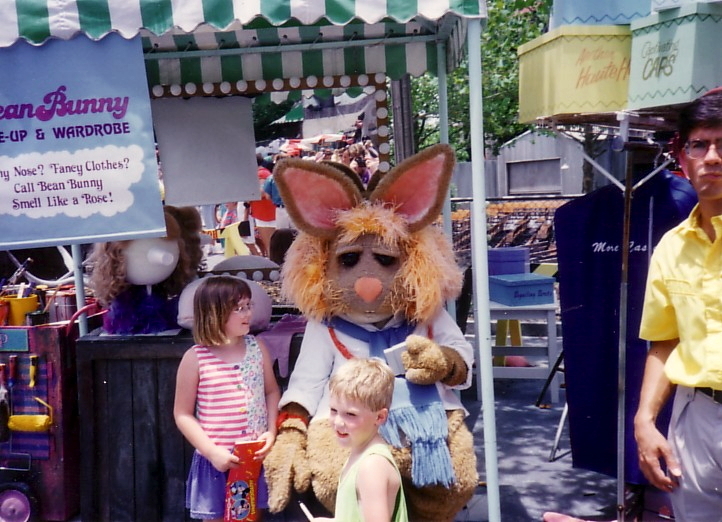
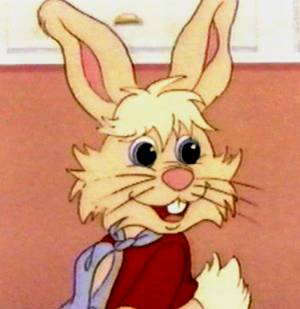
Then we had Bean Bunny, who at the time was only familiar to audiences due to The Tale of Bunny Picnic, but I've already discussed his influence on the show.  The rest of the cast were basically replacements of older characters.

There was Lindbergh the Kiwi, the station's maintenance man, voiced by Gord Robertson doing his best impression of Beauregard the Janitor.

And nary a New Zealand accent.  A missed opportunity.

Vicki, voiced by Fran Brill, was the Scooter of the bunch, acting as the stage manager who was much younger than the rest of the gang.

In other words, Prairie Dawn.

And then we had Clifford, voiced by Kevin Clash, filling in for Floyd.  He led the band Solid Foam (great name) which occasionally had appearances by Electric Mayhem members.  He was the laid back musician and he was to become Clash's main Muppet character.

We'll get to you later.

As our sources of chaos, to round out the cast, were Digit, the robotic person who was the holdover from Inner Tube and Leon, another Clash character, who had shifty eyes and was always trying to grift people.  In fact, he once swindled Bill Cosby in his own show!

This is a surreal event that occurred once on our television screens.

The first episode of the show doesn't really bother with introductions and just assumes that we know who all of these people are.  Kermit, having been put in charge of the Inner-Tube-ish Muppet Central, interacts with these new characters as if they are old friends and we, the audience, are slow for not remembering who these Muppets are.

The main story concerns Digit being able to transport alien television channels through his body into our world, and then the cast takes a trip inside his robotic head to fix him when he malfunctions.  It's quite a trip for a first-time audience.

I understand why Kermit and Louie Anderson are there, but nothing else makes sense!

Oh, did I mention how this show also had guest stars?  And they were confined to their sketches and television monitors in the background, making for some pre-recorded awkward dialogue that would have made the creators of Space Ghost from Coast to Coast proud?  Also, there was no laugh track which I would normally consider a good thing, but coming from The Muppet Show, this new program just feels empty without it.

The first episode ends with the Muppets meeting their alien doppelgangers, the Teppums.  And this would have been neat had the cast not been so completely filled with new faces that seeing their bizarro alternates means nothing to us.

What is happening?!  Where are the old Muppets?!

While this first episode is a big departure from what we are used to from a Muppet television show, you shouldn't think that the whole show should be easily dismissed.  In fact, there are moments of sheer brilliance throughout the following episodes and I shall be discussing some over the next few posts.

I just wanted to prepare you to leave your comfort zone.  Because things are about to get weird.  But with Jim, we wouldn't want it any other way.

Monday, August 6, 2012

You Can't Do That on Television... or Can You?

Originally, I was going to spend this week discussing the follow-up to The Muppet Show that was made in 1996, Muppets Tonight.  But, in order to properly understand what led to that show's creation, it was important to look at 1989's The Jim Henson Hour, specifically the MuppeTelevision segments.  And, in order to understand that, we must first look at Inner Tube, which is a species unto itself.

It's unlike anything you'll ever want to see.

The premise concerns the world inside your television set.  Two engineers, Jake and Henry, oversaw the Inner Tube station, which gathered the very best from "1500 channels" (all of which were fake) in order to provide us with the best quality material.  Like The Muppet Show, it was a variety show with recurring characters and segments.  The wraparound bits would feature the antics of the television station while the sketches and songs would be drawn from the channels.

Unlike The Muppet Show, there were absolutely no Muppets.

Also, everyone looked like this:

Welcome back to Uncanny Valley!

These humanoid characters were not as appealing to look at as the colorful Muppets audiences were familiar with.  But, they still had the behavior of Muppets, with some being accident prone and destructive and others being neurotic and quirky.

Henry is the sympathetic host.  Pay no mind that he looks like a ghoul.

Only a 10-minute pilot exists and it basically tries to introduce all the major characters and concepts in that brief time.  The story, if there is one, follows Jake and Henry as they try to keep the more destructive characters under control.  Crusher, seen in the picture with the two elderly folks, escapes the television set and runs amok, while Glitch, an animated creature, screws up the stations.

I can SEE the music!

You can watch the entire segment below.  You'll notice that a brief intro featuring Kermit has been inserted in order to explain the conceit, as well as to appeal to audiences who may not be as open to the weirdness that follows.  The restored version still has that grainy late '80s VHS quality, which I think adds to the surreal nature of the program.


The pilot is cluttered and lacks focus, but you can still tell the kind of show it's attempting to be.  In fact,  it seems very similar to the aesthetic of MTV in the early '90s or shows featured on [adult swim], like Robot Chicken or Tim and Eric Awesome Show, Great Job!  That level of random, absurdist, non-conformitive sense of humor is all over the place nowadays.  And, to think, Henson tried to manufacture it in 1987.

Move aside, Gramps!  This is Generation X's time to shine!

The segment that is both the strangest and also the best executed is when Zaloom the Pirate hijacks the airways to deliver some an anti-technology propaganda.  The floating head conjures up a tiny world with a little frog who is then killed by the pollution made by nearby factories.  It's memorable and bizarre.  But it's also quite funny.  One could only wonder how this character could have grown had the show been picked up.

"I'm aware of the irony of appearing on TV in order to decry it, so don't bother pointing that out."

But it seemed that the world wasn't ready for this kind of television show.  Henson later reworked it with the title Lead Free TV and planned on making it a part of his upcoming anthology series.  He called it "The Muppet Show of the future" to establish a connection with his other work.  Still, the network wasn't too keen on the idea.  Finally, Henson removed all of the characters (save for the semi-robotic keyboardist named Digit) and put his classic Muppets in the roles instead, along with a variety of some more Muppety-looking characters.

Inner Tube was lost, but it lives on in today's postmodern alternative "anti-comedy" shows.  And at least we got to keep Digit who we'll learn more about as we take a look at MuppeTelevision.

Digit, the sole survivor of Inner Tube and winner of 1989's Creepiest-Looking Muppet Award.

Wednesday, October 19, 2011

The Rise and Fall of Bean Norman Bunny, Part 2: Overexposure

After The Muppet Show had been off the air for years, Jim Henson hoped to try a new style of television to show off his new creations and experiments.  The show was dubbed The Jim Henson Hour and it each episode would be made up of two parts (usually).  The second half would focus on a story or special involving Henson's Creature Shop, usually old episodes of The Storyteller or something new like "Dog City."  The first half would be called "MuppeTelevision" and would run like The Muppet Show.  There would be sketches, songs, and guest stars but the segments would be shot as if the Muppets ran a television studio rather than a theater.  Many new characters were brought in as lead roles to perform along side familiar favorites like Kermit, Piggy, and Gonzo.  But to draw in the younger demographic they needed Bean Bunny.

To quote Kermit, "We hired Bean to be cute so the rest of us don't have to bother."

The cast of "MuppeTelevision"

Unfortunately, the show struggled to build an audience in the primetime hours, and one of the last episodes that aired confronted the ratings disaster head on.  It was soon discovered that ratings were at their highest whenever the show featured sex, violence, or Bean Bunny (or a combination of the three).

And so, Bean Bunny was shoehorned into as many sketches as possible to maintain an audience.

Leading to horrible abominations such as these.

However, Bean's presence could not keep the show afloat, and soon it was cancelled.  This setback did not hinder his fame, though.  It allowed him to move to the forefront of the action partaking in many other endeavors.  As the Muppets started joining forces with the Walt Disney Company, Bean Bunny was first in line to reap the benefits.

Doing whatever it takes to rake in the dough.

He became one of the stars of "MuppetVision 3-D," a Disney Parks attraction that still runs to this day.  Thanks to excellent timing, Bean Bunny has gained immortality due to the wonders of the third dimension.

Not so little anymore.

Bean Bunny was so omnipresent that he even arranged to join the cast of the Muppet Babies!  The logic that all of the Muppets knew each other as toddlers was stretched pretty thin to begin with, but then to add in a character who was deliberately a child when he was introduced to the Muppet family and say that he was a baby with them as well?  Well now you're asking too much of us!

On top of that, he's the only one who is toilet trained!

Bean Bunny was on top of the world.  At this point, anything was possible.  The world was his carrot patch and he could have been on Easy Street for the rest of his life.  Sure, he was being used for his cuteness, but he did not care.  Everything was coming up Bean Bunny.

But as with most child actors, the initial charm fades, and the antics do not seem as cute anymore.  He was on a path towards destruction, one that he could not have foreseen.  The bigger they are, the harder they fall.  And Bean Bunny was about to hit rock-bottom.  Join us tomorrow as we learn about the tragic aftermath of the young kit who had so much potential and promise.

Play us out Bean (jump to 11:42):