Friday, December 9, 2011

New Toys: A Year Later

Last year, as part of my Christmas specials retrospective, I provided a fairly in-depth review of The Christmas Toy.  I was afraid of repeating myself as a re-watched the special this year, but, much like the message of the show, there is still life in the old and forgotten.  The story centers around a toy tiger named Rugby who fancied himself to be the best toy in the children's playroom due to being the big Christmas gift last year.  As the next Christmas approaches, Rugby must learn that as time passes, the new becomes the old.  His time in the spotlight will soon be at an end.

Like Rugby, my first review is now a year old, but I shall pull it out again this Christmas to see if my interpretations still remain relevant.  Old material will be in italics to keep things organized.  And now, The Christmas Toy, again!

(The version I watched last year was a home-recorded tape that was uploaded to YouTube.  This year, I watched the DVD version that is available on Netflix Instant.  The major differences are that the Kermit the Frog introduction is cut out, as are the commercials/sponsorship with Kraft Cheese.  But at least the picture and sound and editing fares a lot better.)

Now with better video quality!

It's Christmas Eve, and the toys in the Jones family playroom are preparing for the arrival of new toys. However, Rugby, a stuffed tiger, doesn't quite understand what Christmas means. He was the big present at last year's Christmas, and became the children's favorite toy. He thinks that Christmas is a day to celebrate him, so he plans to sneak back under the Christmas tree with the rest of the presents so that the children can open him out of his box again. The rest of the toys band together to get Rugby back to the playroom before Christmas morning. Not only do they want to spare him is inevitable disappointment, but it's crucial to save his life.

For you see, if a moving toy is found by a human, it will become "frozen" (i.e. die).


And within 5 minutes, the tone is immediately darker than your average Christmas special.

For as rare as this Christmas special is, I was initially let down by the production quality. The actors who play the human family are extremely wooden, the dialogue was very weak, and the storyline wasn't very engaging. In Toy Story, the rules of how the toys live aren't explained, we just accept what we see, and learn things along the way. In The Christmas Toy, half of the dialogue is exposition. Characters say things like "It's a good thing us toys can't feel pain." Who talks like that? All of the toys behave like children, which is understandable since they live in a children's playroom, but it gets annoying when they all state the obvious and need the rules of their world explained to them.

Includes 2 AA batteries, movable parts, and the ability to dispense exposition at the push of a button!

What Henson does best is that he makes fully realized worlds and creates ways to make puppets come alive. In the playroom, there are so many toys moving and walking around, it's amazing to believe that no computer trickery created this effect. It's not a cartoon, it's real.

Allow me to expand on this for a bit.  The design that went into each character is incredible.  Toys, large and small, are uniquely crafted so that they look "realistic" when they come to life.  A few look like simple hand puppets, but the smaller ones incorporate sophisticated technology to allow their mouths and limbs to move.  Ed Christie, a puppet designer, has cited Belmont the Horse as one of his greatest creations, due to the combination of foam and gears to recreate a commonly seen children's toy.

And the kids can actually ride on him too!

Even more surprising is the near constant presence of a floor.  In every Muppet production, there must be some way to conceal the puppeteers.  But in this show, there are many shots showing the puppets walking (or rolling) around the floor and talking at the same time.  I try not to think too much about how these effects are accomplished for I don't want to lose the magic.

It's the 20th Century, puppets can walk now.

All of the toys are owned by the two Jones children, except for Mew, a little catnip mouse. None of the toys respect him because he smells bad and isn't "a real toy." So when Rugby sets off on his journey, Mew is the only one who supports him, because he too doesn't know what really happens at Christmas. Being the only toy who has been out of the playroom (via the cat's mouth), Mew helps Rugby to make sure he makes it downstairs without being frozen. And all the while, Rugby still treats him terribly. Then, after all of the toys convince Rugby to come back to the playroom, and you think the special is over, Mew gets frozen! All he wanted to do was fit in, and he suffers for it. During the whole special, there are corny jokes and cheesy dialogue, yet the foreboding presence of death looms in the background. I feel this special would have been amazing if they trimmed it by half, taking out the unnecessary exposition and focused more on the relationship of Rugby and Mew. That's where the true core of the story lies.

I knew the story before watching the special, so nothing surprised me, even the dramatic turn of events. I was ready to call the whole thing a dud, but then this moment redeemed the whole special for me. Rugby approaches the frozen Mew and sings a song called "Old Friend." It's a very simple song with obvious lyrics about friendship and love, yet it seems so pure the way he sings it. He realizes too late how much he cared for this toy. Mew's death didn't get to me, but the song certainly did.

Old toys, new friends.  Each one is a gift.  Don't take them for granted.

A year later, there is one aspect of the special I wish I had mentioned.  I cut out the section of my review that compared this to Toy Story
 in depth because the similarities are so numerous I do not need to point them all out.  But I'm surprised I failed to mention the importance of one other character.  I was so focused on the relationship between Rugby and Mew, that I ignored another key player: Apple.

Forever alone.

This redheaded doll was originally in Rugby's position, tossed aside as soon as he entered the picture.  She knows the pain of being dumped by those who love you the most and swore they would never forget her.  The ongoing march of time inherently reminds us that there will come a point where everything will be forgotten.  Despite our best intentions, our greatest devotions will cease to be.  Apple learned this and, while hurt, she did not put much weight on the situation.  She used her premature replacement as the primary source of joy to forge new relationships while still being their for her child when she needed her the most.

It is for love that we make sacrifices.  To place ourselves in discomfort or danger to protect those we care about.  Mew sacrificed himself to help a new friend, while Apple sacrifices herself every day, to help an old one.  Although there is no life in a toy, we associate our cherished childhood possessions with having a soul.  It does not matter that their eyes are made of plastic or cotton.  They have eyes and when you look into a toys eyes, you can remember all the times you played with them, all of the adventures you imagined, all of the memories you share.

The toys hold on to these memories for you and never let go.  When we lose a toy, we do not cry for the monetary value that is lost with it.  We cry for the displacement of our memories.  They are extensions of ourselves, keeping our thoughts organized.

As you grow, you may grow tired of many things.  You play with your toys less often and soon not at all.  But every once in a while, it does not hurt to retrieve your old friends from wherever you stored them away.

They are waiting for you.  And they will continue to wait for you.  Year after year.
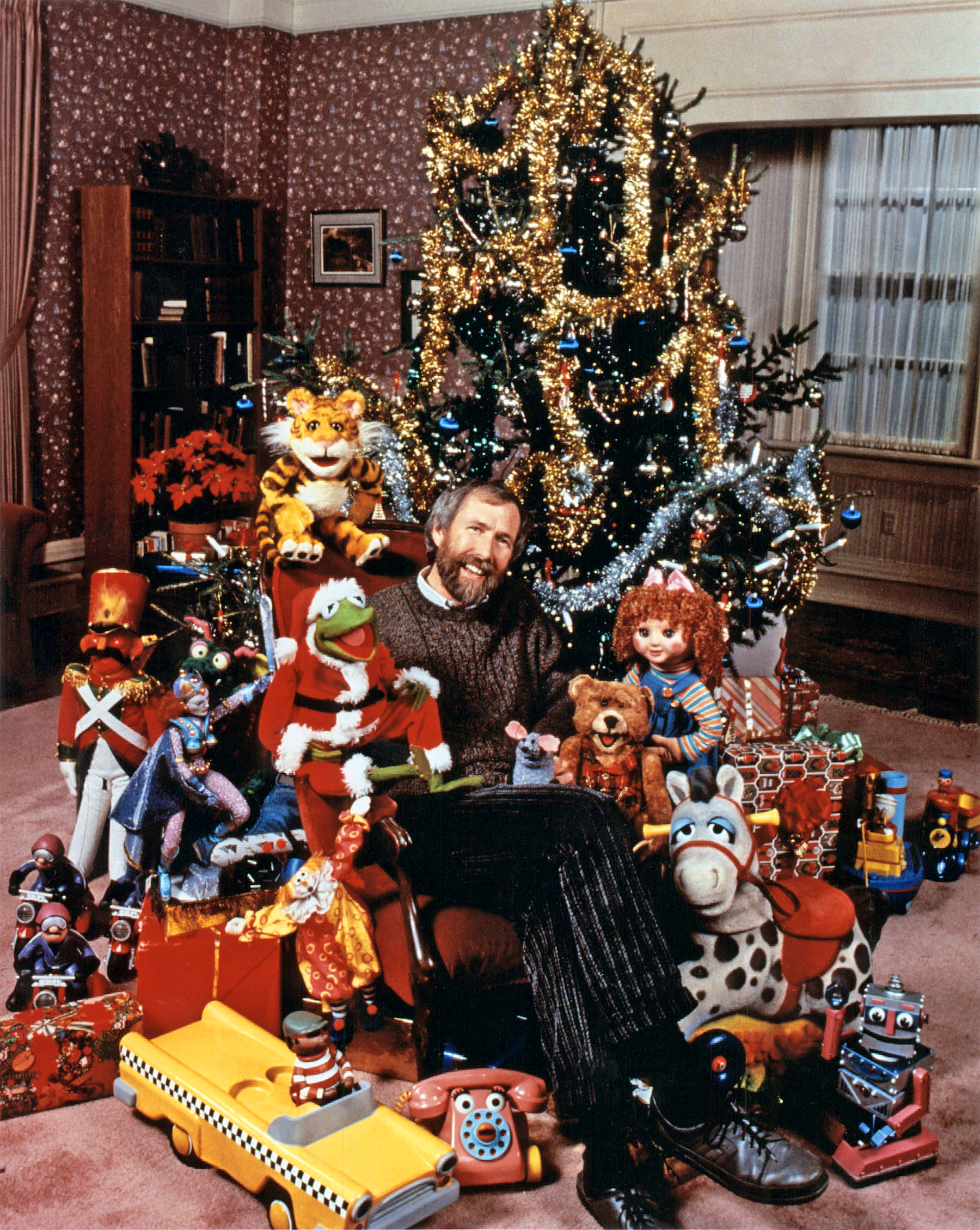
Loyal friends to the end.

Thursday, December 8, 2011

Christmas Overload

I have a dilemma.  I am running low on Christmas specials that Henson oversaw.  So tonight, I have a choice.  I could either discuss one of the many short pieces that appeared in larger Christmas variety specials or I can focus on a post-Henson special.  Because the Christmas shorts are hard to come by (and those that are easily found don't set out to accomplish much beyond some jokes), I will stray from my mantra and look at one of the Christmas specials that premiered after 1990.

But which one to choose?  A Very Muppet Christmas Movie is too long to tackle in one day.  Letters From Santa is kind of all over the place.  A Sesame Street Christmas Carol has kind of been done before (and will take away from the Muppet version).  And I cannot handle more than two-minutes of Mr. Willowby's Christmas Tree due to Robert Downey Jr. speaking like a madman.

Seriously, it gives me an aneurysm trying to decipher his words.

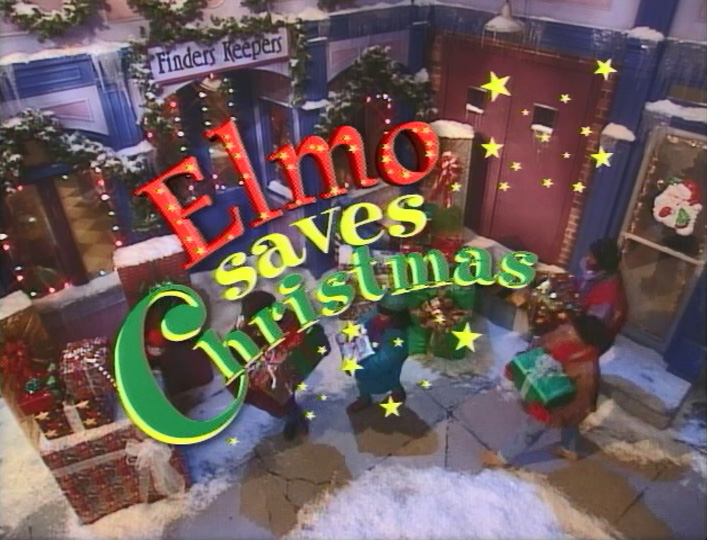
It looks like it is up to everyone's favorite furry red monster to save the day!  I have decided on the following special because it is the only one that is actually a (mostly) original story, rather than a Muppet version of a typical Christmas tale.  And lo and behold, it actually covers some dark territory for Sesame Street. No, they don't quite make 'em like Elmo Saves Christmas.

It's like Groundhog's Day for kids!

As with all great stories, the great Maya Angelou narrates this yuletide Aesop Fable to convey the weight and magnitude of the situation young Elmo finds himself in.  After one of the young Muppets nonchalantly declares that he wishes it were Christmas every day, Angelou sets the record straight about having too much of a good thing.

Well, this Christmas party did not turn out quite as expected.  No adults even RSVP'd.

The story begins with everyone on Sesame Street preparing for Christmas the next day.  The shopping is done, the decorations are up, and spirits are high.  Elmo prepares for the arrival of Santa by waiting by the fireplace all night.  Suddenly, he is awoken by the sounds of Mr. Claus trapped in his chimney.

Jackpot!

Elmo frees Santa, thus saving Christmas!  The End!

Wait, no.  Santa rewards Elmo with a snow globe that grants wishes when you shake it.  Elmo decides to hold on to his gift for a special occasion.  And then comes Christmas, the most special occasion of all!  Elmo enjoys walking about town, receiving gifts from neighbors and enjoying the laughter and songs.  And so he is struck with a brilliant idea.

I will take over Sesame Street, and then, the world!  All for my amusement!

He wishes for Christmas to occur every day.  Now, usually, on the day after Christmas (after everyone has spent their gift cards and returned their gifts), people are turned off by everything Christmas-related.  No more Christmas songs are played and no more Christmas movies are watched.  It's as if we all breathe a collective sigh of relief that Christmas is over.  Perhaps it is because we know that it is the day that is furthest from the next Christmas so we do not want to be disappointed by reminders of yesterday.  Whatever the case, everyone is done.

But on Sesame Street, everyone quickly jumps on board with the idea and looks forward to Christmas #2.  Santa Claus, however, has a different agenda, and realizes that someone made that wish again.  So he sends Elmo on a time-traveling trip with his fastest reindeer Lightning so that he can see the negative effects of "Christmas every day."

Rudolph may be able to see through fog, but Lightning can break the space-time continuum.

Elmo and Lightning witness Christmas on Easter, Christmas on the Fourth of July, and Christmas on next Christmas, with each visit depicting a world that grows darker and darker.  The novelty has quickly worn off and people have all become bitter and depressed.  All businesses have closed, the Count has grown tired of counting Christmases, and worst of all, Big Bird has been separated from his best friend Snuffy, who was supposed to comeback from visiting relatives "the day after Christmas."  By the time December 25th rolls around again, it's just the 366th Christmas in a row, so no one even acknowledges it's significance.

The saddest sign to see every single day.

Elmo learns his lesson (finally!) and then returns back in time with Superman to stop himself from ever receiving the snow globe in the first place.  Instead, he settles for the greatest gift of all, a moo-bunny.

Not to be confused with a "cabbit."

This special stands out above the other post-Henson fare because it deals with a topic that many children can relate to at Christmas time.  We build it up to be such a magical day that, for over-indulgent children, they do not understand the reason we cannot have it all the time.  This show teaches the concepts of "forever" and  "special" in a way that few other children shows have tackled.  To a child, it would be great to eat chocolate for every meal or watch television all day long or only have recess instead of classes.  Moderation is foreign to them.  So to see Elmo go through the journey with such resistance to accept the horrors around him, it can be very eye-opening to a young child.

I quite enjoyed the small touches this episode had (that were not present in the Sesame Street special I covered earlier this week).  Even though this was very much Elmo's story, he took a backseat as he observed the trials of all other characters.  This allowed the ensemble to work cohesively, rather than all focused on one objective.

My favorite moments include:

- Bob leading the carolers in the song "It's Christmas Again" every single day.  I loved how the song evolved from a joyous romp into a monotonous routine with new lyrics for each day.

- Big Bird's story about being unexpectedly torn away from his best friend, especially him writing the same letter every day ("Dear Snuffy, I miss you.  Your best friend, Big Bird") and the letters piling up by his nest because the mail isn't picked up on Christmas.

- The Count's Christmas outfit:


- Bert and Ernie responding to George Bailey talking to Bert and Ernie in It's a Wonderful Life (which plays nonstop on every television set).

- And Oscar wallowing in everyone's misery throughout the year.  On the final Christmas, when Elmo says he was planning on using his final wish for rollerblades but decides instead to wish for one Christmas a year again, Oscar butts in, "No! Go for the rollerblades!"  That's the Christmas-hating grouch we love.

Yes, this was truly a Christmas special that felt like a Jim Henson production.  Even though he was not around to oversee it, it manages to keep his spirit alive with its sharp wit, catchy songs, and a thoughtful message to all viewers.  Christmas is special.  We can keep it's spirit alive all throughout the year.  But a little bit can go a long way.  If we got everything we wished for, there would be no more motivation in life.  Sometimes it is what you rarely experience that makes you appreciate the moments in between.

That was great!  Same time next year?

Wednesday, December 7, 2011

O Christmas Tree

Yesterday I spoke of Christmas traditions that we take for granted and the Christmas tree is certainly one of the oddest.  It began as an outdoor festivity, being decorated in the town square.  Soon, upper class citizens began erecting their own smaller versions in their domiciles, just because they were wealthy enough to do so.  And when the wealthy start a fad, everyone else starts to mimic them.  While it has logical historical roots, it has since evolved into a custom we just do instinctively, for without one, "it wouldn't feel like Christmas."

The decoration of Christmas trees is their main appeal, as neighbors involuntarily "compete" to create the prettiest tree.  Some enjoy decorating with family keepsakes and gifts while others pick a theme and go for style.  Regardless, the end result is alway pleasing to the eye and it gives us a symbol to remind us of the holidays.  But, as with any technique, if it can be done, there is always a way to do it better.  Decorating trees became an art form unto itself, as each decoration represents the unique personality of the designer.

This was the theory that served as the driving force behind the charity auction "Night of 100 Trees."  Beginning in 1982, one hundred trees designed by celebrities from entertainment and sports would be auctioned off to raise money for charities such as "Save the Children."  Throughout the 1980s, as the AIDS epidemic took strong effect, money also went towards research for the disease.  The night itself became an enormous gala, a Christmas party to end all Christmas parties (for the upper class, of course).

Most trees followed the same form of presentation.  A basic (fake) tree was used as a starting point for ornaments and other decorations to bedazzle the plastic plant.  Trees of many colors were created over the many years, and starting in 1986, Jim Henson joined in the action.  Muppety decorations adorned the first tree, and in 1987, Miss Piggy donated her own special arboreal artwork.

Then, in 1988, this guy entered the field:

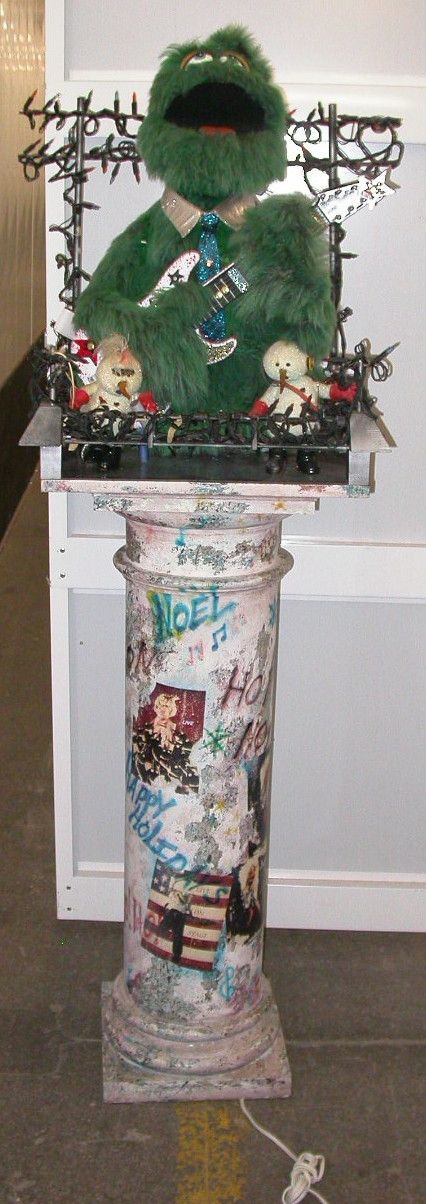
Meet Spruce Springsteen

Of course a "Muppet Christmas tree" should be a Muppet himself!  The tree base was adorned with Muppet images and art based around current rock musicians (which had appeared in Muppet Magazine) just to remind the owner that this was indeed a Muppet product.  Spruce Springsteen was designed by Sesame Street designer Ed Christie and the base was sculpted by a freelance artist named Karl Wendelin, but a tag was attached with the official Jim Henson signature of approval.

It's legit.

The tiny snowmen roadies that surround the tree are actually repurposed Doozers from Fraggle Rock.  So not only did the recipient get a custom built puppet, they also received a couple of artifacts from a Henson production as a bonus!

Even as a snowman, a Doozer doesn't stop working.

This was the final year Henson's company entered the auction, and the event itself did not last too many years afterwards.  So any tree from that era is truly a rarity.  But of all the trees created for the events, it makes sense that the Henson-sanctioned one would be the most unique and interactive.

Sure, the pun in the name and theme may seem a little silly, but the Night of 100 Trees was supposed to inspire joy and happiness.  The tradition of Christmas trees is inherently ridiculous, but because it has become such a staple of our holiday, they are treated with the respect and dignity of a religious icon.  Leave it to Henson to remind us to loosen up and have fun with your decorations.  At Christmas, everyone deserves a little goofiness.

Tannenbaums like us,
Baby, we were born to run!
(And shed needles on the carpet.)

And just think about all the presents you could fit under this thing!

Tuesday, December 6, 2011

Baby's First Christmas

The first year of a baby's life can be very intense.  Not only are they learning about their immediate environments, but the world around them is already shaping the "norms" that will soon become familiar to their minds.  Annual events are occurring for the first time without explanation, so by the time people are old enough to register what is happening, these holidays already have an innate sense of familiarity attached to them.

Take Christmas, for example.  One day, in the middle of winter, we wake up early, sit around a decorated tree and unwrap numerous presents delivered by a mysterious figure known as "Santa Claus."  There is no reason to question any of this, because everyone around us just accepts it.  Life is filled with magic, at least for one day.  Many unanswerable questions surround this event, and the answers are too grand for our tiny minds to comprehend it all.  Once we start overanalyzing it, worry starts to settle in.


1988 was the first Christmas for Baby Kermit.  He had learned about Santa Claus and knew that on Christmas morning, the nursery would be filled with presents for him and his friends.  But on Christmas Eve, just as everyone falls to sleep, it begins to snow.  Kermit, fearing that Santa would be unable to locate the nursery in such weather, takes it upon himself to venture out into the blizzard to find Santa himself.

He follows the Northern Lights to make his way to the North Pole where he discovers that Santa has already left.  Kermit grows even more anxious as he realizes he'll never be able to get in touch with Santa in time.  The first Christmas for he and his friends may not occur at all!

Fortunately, the big man himself appears to assuage Kermit's fears.  He explains that he was able to find Kermit due to the overwhelming concern for his friends' happiness.  This love for his friends shines brightly through the thickest, darkest weather.  Kermit learns that Santa is much more than a man.  He is capable of great powers due to the generosity of people like him.  Although he is too young to completely understand, it is okay.  Christmas is not a time to be afraid.  It is the one time of year where good things just happen, no questions asked.  There is no need to worry.

Have no fears, little one.

After spending the rest of the night delivering presents, Kermit wakes up back in his nursery, to find that everything is as it should be.  Perhaps it was just a dream, but he learned a valuable lesson.

People may find many reasons to avoid Christmas.  Some may complain about the over-commercialism while others stress about holiday travel, shopping and cooking.  The religious aspect may be alienating to some while it feels underrepresented for others.  Our collective anxiety is at an all-time high during this season.

But remember your first Christmas?

The event unfolded with nothing but frivolity and joy.  Gifts were exchanged, your family was together, and everybody was happy for no discernible reason.  It became a time to look forward to, not to hide from.  If you find yourself growing anxious this holiday season, take a step back and remember that the point of Christmas is to peacefully relax.  Let your stresses fall by the wayside and let Santa take care of the heavy lifting.

At the very least, find someone you can share it with, love 'em, and hug 'em.

Once again, McDonald's has shown us the true spirit of Christmas.

Monday, December 5, 2011

Yucky Christmas Trash

On December 3rd, 1978, Christmas Eve on Sesame Street premiered on PBS.  This wonderful special brought all of our favorite characters together to spend their first Christmas with the American public.  Cute kids, great songs, and tender moments were showcased as Big Bird and his pals awaited the arrival of Santa Claus.  The level of maturity and entertainment we had grown to expect from the show was all present.  It had everything one could possibly want and need out of a Sesame Street Christmas special.

On December 8th, 1978, A Special Sesame Street Christmas premiered on CBS.

You keep using that word.  I do not think it means what you think it means.

Um....what?  We just had a Christmas special on Sesame Street five days ago!  Was it a repeat?  Was it a sequel supposed to take place the day after the first one?  Was this some sort of mistake?  Unfortunately, it was none of the above.

The executive vice-president of the Children's Television workshop at the time decided to allow CBS to produce it's own Sesame Street special on the grounds that having two in production would result in at least one making it to air.  As if the popular kids show needed such help.  What resulted was a low-budget special with forced lessons, a weak story, and enough overacting B-list celebrities crammed in to make the viewers at home appreciate their ability to turn of their television.  Barely half of the human cast even appeared in the special and only three puppets were included: Big Bird, Oscar, and the dog Barkley.  While CEoSS was an ensemble show with multiple stories and opportunities for each character, ASSSC was going to be all about Oscar.

Pictured: Oscar performing a rotten version of "Yakkety Yak."  Not pictured: Entertainment.

Now, there are many great Christmas specials that focus on unpleasant characters.  The Grinch, Scrooge, and Billy Bob Thorton are all classic Christmas villains with great Christmas stories.  And Oscar is a great character who is a lot of fun to watch.  But the problem is that Oscar's personality is set in stone.  Having the plot focus on him changing his anti-Christmas ways means the whole show is ultimately pointless.  Even if Oscar has a change of heart by the finale, he's not going to be all friendly and chummy in the next episode of Sesame Street.  So what we get is an hour of grouching, followed by a minute of "I guess Christmas is okay."  Plus obnoxious musical numbers and pointless cameos.

Oh, the cameos.  Let's just take a look at our all star cast:

Anne Murray as the Ghost of Christmas Past

Imogene Coca as the Ghost of Christmas Present

Dick Smothers as the Ghost of Christmas Future

Ethel Merman as herself, singing "Tomorrow" (which is just the worst)

And Henry Fonda for one line, because why not?

I know!  All of your favorites!

If you haven't guessed by the great outfits, the plot is loosely based on A Christmas Carol.  Special guest star and host Leslie Uggams(!!!) decides to change Oscar's negative attitude by pulling the ol' "let's dress up as ghosts and recreate scenes from Oscar's life" routine.  However, Oscar sees right through the visions saying that he was never pleasant and has always hated Christmas and always will.  The ghosts still scare him though, prompting an appearance by the future King of Pop himself, Michael Jackson!

Don't worry, he doesn't sing at all!  There's no reason to suddenly make this special bearable!

At the center of it all is a crippled alley cat who is named "Tiny Tim" of course.  The adults urge Oscar to share his food scraps with the cat, but Oscar refuses to help.  It is not until he sees the "future" where the cat dies that he decides to change his ways.  I should probably mention that this cat clearly does not want to be involved in this horrid special, as it meows in fear whenever it is placed near Oscar.

If my leg weren't in a cast, I would be out of here so fast.

There is an interesting moment where Oscar starts complaining about the amount of Christmas-related garbage that has been piling up in his can.  Maria is shocked to hear Oscar badmouth trash to which Oscar replies, "I said this was Christmas trash; I didn't select it!"  Here, he is unintentionally commenting on the special itself.

Christmas specials come in many forms.  Those that the public deems worthy get to be repeated year after year.  Each new generation gets to enjoy them just as their older relatives did as children.  But then there is the Christmas trash.  The quickly-made specials hoping to capitalize on the "spirit of the season" without really understanding what made the classic specials work.  They lack the charm, weight, and wit of those that came before them.  On a basic level, the audience will recognize the images and motions that these specials go through, and they may endure them once, but there is nothing for them to hold onto, waiting for them to see it again the following year.  A Charlie Brown Christmas, for example, has become a staple of the Christmas season, merely because it is so different from the others around it.  It maintains a quiet elegance that just paints a picture of a calm pleasant Christmas as a child.  A Special Sesame Street Christmas just fails on many levels.

If you think you can endure the mediocrity, you can watch it here.

The usually bright and lively Sesame Street set seems dark and dead.  Christmas and non-Christmas songs are thrown together at random.  Celebrities appear without explanation and disappear just as suddenly.  The storyline has been done to death and nothing new is added to make it feel fresh.  Only a handful of regular characters appear, and they do not contribute much to the plot.  The fact that Jim Henson, Frank Oz, or any of the rest of the puppeteers were not involved is a big red flag.  The host Leslie Uggams does not warrant the amount of screen time she receives, delivering nothing but boring dialogue and exposition.  Oscar is the only character given enough time to develop and at least he provides humor with his constant complaining, allowing his viewpoint to be felt deeply by the audience at home.  But at the end of the special, I just ended up hating Christmas.  Whoops!

But the worst part is that it followed an absolutely marvelous special by a mere five days!  I could not imagine being a child during 1978, having just watched Christmas Eve on Sesame Street and getting all into the Christmas spirit, only to have it shot down by this insulting mess.

As much as I promote deeper meanings in all works of art, especially at Christmastime, sometimes you can't help but end up with a load of rubbish.

The only good thing to come out of the show was this bitchin' photograph.

Friday, December 2, 2011

Two Christmases Together

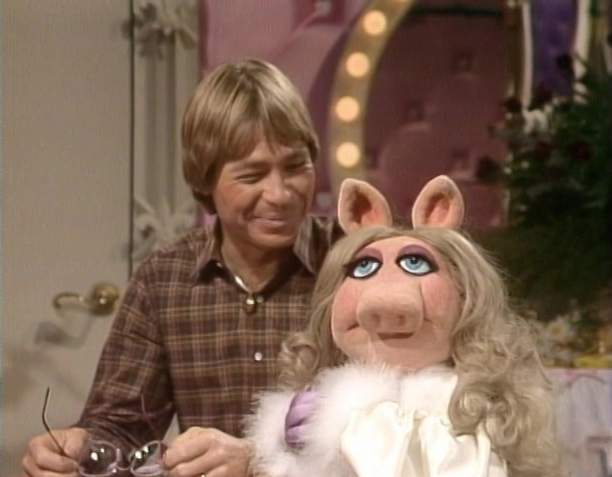
Christmas specials come in many varieties.  Some set out to tell a story, while others focus on the smaller moments of the holiday season.  Namely, the songs and the tales that have been told and retold for years.  These annual traditions create a sense of community.  When John Denver decided to create a Christmas special with the Muppets, he did not set out to radically alter our perception of the season.  He just wanted to create an hour of wholesome entertainment which could be shared among the whole family.

Ah yes, who could forget "A CH IS MA  T  ETH  ?"

John Denver & The Muppets: A Christmas Together exists in two forms: an album of music and an hour-long program based on that album.  Both are similar in sentimental style, but there are a few differences.  Because I was only vaguely familiar with the television special (which I negatively reviewed two years ago), I decided to look at both in tandem.  Many people are fond of both these Christmas products.  I wanted to see what I was missing out on and, more importantly, which one prevails as the superior creation.  Links to the songs will be provided within each description.

A Christmas Together: The Album vs. The Show


Round One:  The Twelve Days of Christmas

The very first song on the album also opens the show.  John Denver sings the first "partridge in a pear tree" line and is joined by 11 Muppets for each additional day.  This serves as a good intro of all the players of each special, although the order and participants are different for each.  On the album, Lew Zealand, Beauregard the janitor, and Bunsen and Beaker each take a verse, while Janice, Floyd, and Animal from the Electric Mayhem appear in the show (allowing Animal to sing the "twelve drummers drumming" line, as he should always do).  The show gets a point there, but what really helps it is the additional flubs of Fozzie as he struggles to keep up with the repetitive song.  This version is so admired that it was recreated in 2009 on Late Night with Jimmy Fallon.  Album: 0, Show: 1

BA-DUM-BUM-BUM!!!

Round Two: Alfie the Christmas Tree

"Alfie the Christmas Tree" is a poem written by John Denver about a tree who hopes that people remember that Christmas is a time to be grateful for not only family and love, but life and nature and everyone who inhabits this world.  The poem the segues into Denver singing "It's in Every One of Us."  It's a nice moment, but they way it is presented in the special comes off as very preachy.  Denver wanders around the wintery set, looking directly in the camera the entire time, making it hard to visualize the images of his poetry.  The album version is less forceful and, thus, easier to listen to.  The way the music swells behind his voice is far more pleasing to the senses.  Album: 1, Show: 1

Round Three: The Christmas Wish

Kermit and John sing a beautiful song about Christmas and unity.  The two versions are identical, except the show's version is prefaced with a small dialogue between the two.  Kermit is down in the dumps, noting that he will be away from his family again this Christmas.  He reminisces about life in the swamp, and although it is peppered with frog-related humor, it is genuine.  It becomes a perfect Kermit song with the additional backstory.  Album: 1, Show: 2


Round Four: Christmas is Coming

Miss Piggy leads a group of Muppets in a rousing version of the song.  So rousing, in fact, that she cannot control herself when it comes time to finish.  The show version comes a little bit out of nowhere and features nearly the whole cast joining in, which is humorous, but sloppy.  Also, I am a little biased against Piggy in this television special for reasons I'll explain later.  So I'll stick with the album version, which is smoother and just as entertaining.  Album: 2, Show: 2

Round Five: A Baby Just Like You

This is an original song by John Denver written for his infant son Zachary, explaining what Christmas is and how wonderful it is.  Unlike "Alfie the Christmas Tree," this one works better when Denver sings directly to the camera as it slowly draws closer, because it is a personal moment between him and his son.  The Muppets join him on the album version for one line, but this is really Denver's song, so his solo performance is better.  Album: 2, Show: 3

Round Six: Have Yourself a Merry Little Christmas

A duet between Denver and Rowlf at the piano.  It's just as perfect as you would imagine it to be and is nearly identical in both versions.  However, in the show, Miss Piggy runs in right at the end of the song, spoiling the tender moment.  Advantage, the album version.  Album: 3, Show: 3

Round Seven: The Peace Carol

A duet between Denver and Scooter, this time.  Scooter is a great singing partner, so, while I enjoy the image of all the Muppets crowded around the living room at night, basking in the glow of the fireplace and the Christmas tree lights, it's odd staging to have Denver and Scooter on opposite sides of the (crowded) room singing a duet.  Let Scooter have his own moment.  Album: 4, Show: 3

Round Eight: Silent Night, Holy Night

This song is much better suited to the ensemble in the living room.  It is sung originally in German, then in English.  This is the finale for the show, so they use this opportunity to pull back and reveal a multitude of children singing.  That makes for some good schmaltzy TV, and what's even better is that the children they do close-ups of aren't even singing the words.  Their tiny heads are trying to make sense of this whole moment.  That seems like a fault, but it makes the whole scene ten times cuter so the show gets one right at the end.  Album: 4, Show: 4

Hmm, we're at the end of the similarities, and both album and the show are holding their own.  We are going to have to settle this battle based on the merits of the rest of the material that is unique to either the album or the show.

Tiebreaker: The Rest

Let's tackle the show first.  While it is essentially a variety show, there is a little plot making its way through the musical numbers, making the structure similar to an episode of The Muppet Show.  For some bizarre reason, we see the special in the progress of being made at the same time as it's happening.  If that sentence was confusing, it's because I was confused as soon as the opening credits were over.

We began with John Denver and the Muppets singing "The Twelve Days of Christmas" decked out in holiday apparel.  The next scene is of the cast receiving the scripts...for the show they have already started.  What?  Then, after John Denver leads them into a little back stage rendition of "The Pleasure of your Company," he walks through a door into a white void where a holiday-themed set springs up around him and the song continues.  WHAT??

WHERE ARE WE???

After breaking the laws of space and time, we get into the real meat of the story.  Miss Piggy complains about being cast as an elf in the special and, more importantly, having very few lines.  She tries to seduce (?) John Denver into rewriting that skit and, after some "comedy," he relents.

Shady backstage deals in a pig's dressing room.  Christmas!

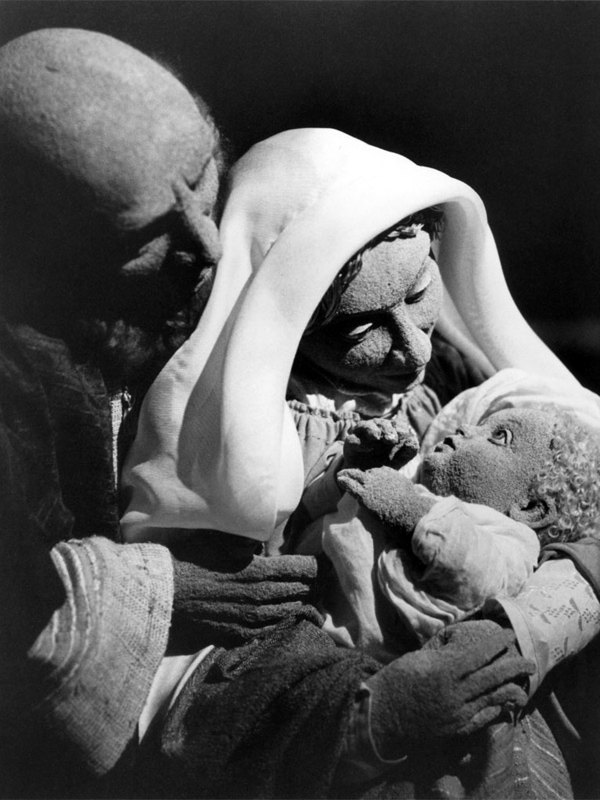
The new musical number involves John Denver as an inept wooden soldier going off to toy war, while his sweetheart, a dolly played by Piggy sings "I Will Wait for You," (i.e. the song that plays at the end of the Futurama episode about Fry's dog, which is a far better use for the song).  And that's it.  The wooden soldier dance number is cute, but it makes what is already a cheesy special even more corny and awkwardly paced.  The only original aspect of the special that I enjoyed was the retelling of the Nativity, which involves Henson-approved puppets of Joseph, Mary, and baby Jesus.

The most dignified use of foam and felt.

The rest of the album, on the other hand, is a treasure trove of extra Christmas magic.  After the cast sings a standard version "Deck the Halls" (which will be covered in a later special with superior results), each remaining song is a classic.  Robin the Frog and Denver sing "When the River Meets the Sea" from Emmet Otter's Jug-Band Christmas.  The Electric Mayhem covers the Beach Boys' "Little St. Nick," reminding us how under utilized they were in the show.  And finally Denver sings "Noel: Christmas Eve, 1913" which is just hauntingly beautiful.  Yes, the album really came out ahead.

The liner notes and art for each song.  Click to enlarge, as each image is lovingly crafted.

So it seems as if the album is the winner.  As a complete product, it is slicker and wonderful from start to finish.  The television special has its moments, but since the best parts are taken from the album, one is ensured greatness in the original soundtrack.  Both try to maintain a relationship between sentimentality and humor, but the album leans more towards the former, allowing the comedy to remain natural and subdued.  The Muppets expertly showcase their respect towards the holiday, without the need to overact or make jokes.  John Denver & The Muppets: A Christmas Together is a fine addition to the yuletide musical canon, and it can warm any home in which it is played.

Finally, let us close out the post with one last moment where the album prevails.

May our stomachs be filled with figs.  And bacon.

Thursday, December 1, 2011

Homemade Gifts

Some people in life just can't be pleased.  No matter how decent you are towards them, they will find some reason to resent you and your efforts.  Perhaps life has dealt them one to many bad hands.  The only way they can gain control is by nitpicking and absconding from pleasantries.  Ironically, the only thing that brings them pleasure is sharing their displeasure.  Such is the case with grumpy Mr. Figg.

Mr. Figg (right) in the middle of his trademark cry of disgust and contempt.

Who is Mr. Figg, you ask?  He is one of the four stars of the do-it-yourself Christmas special entitled "The Purple-Necked Black-Beared Blatch."  What sounds like a rejected Dr. Seuss title is actually a one-act play written by Jerry Juhl for the December 1969 issue of the popular magazine Woman's Day.  Mothers across the country were given instructions on how to build the Henson-designed puppets and put on this little pageant in their own living rooms.  By having the works of Juhl and Henson come through the parents directly, children would better reap the benefits of the short tale.

For your reading pleasure, I present the full play.  It's a quick read.  You have time.


The siblings Zing and Zang Zong are as energetic as their onomatopoeic names suggest.  They represent the unbridled optimistic yin to Figg's unwavering pessimistic yang.  Just as they fail to see Figg's sour attitude and antagonistic behavior towards them, he fails to understand what makes them so peppy.  And, like many adults, whatever he doesn't understand makes him angry and violent.

The titular Blatch is a blank slate.  Whatever others project onto it is what it becomes.  Mr. Figg tells the audience that he has captured this fearsome creature in a box that will cause suffering and misfortune.  Yet it never exhibits such characteristics.  As soon as the Zong twins get a hold of it, it becomes faithful and caring.  Did it have a change of heart?  Or was it always like this?  It seems as if it would not settle on a form until it had been perceived by the others after opening the box.  Schrödinger's Blatch, if you will.

Like a baby bird claiming its mother, the Blatch absorbs the Christmas spirit of the first people he sees, making him a vessel for joy.  And so, in a rare move for a Christmas special of any kind, the Blatch is re-gifted to Figg.

Re-gifting, in most social circles, is taboo.  Unless the gifts are used as some part of "white elephant/Yankee swap" situation, giving such a gift would be frowned upon.  If the gift is unopened and the original gifting party is totally unaware of the transaction, then it can slide.  But re-gifting to the person who gave it to you is a huge no-no.  Usually this results as an unfortunate mistake, but the happy-go-lucky Zongs blatantly re-gift with pride.

And, against all odds, Figg is deeply moved by this action!  Even though it is disrespectful and tacky, it was born out of a genuine desire to appreciate him.

A gift is a gift.  And although it is so cliched to say, "It's the thought that counts," remember that when you have lost all hope for merriment during the Christmas season, that one small thought is all it takes.  


(If you would like to make your own production of this play, the original instructions for puppet design can be found here and a printable pattern sheet can be found here.)